The Little Prince
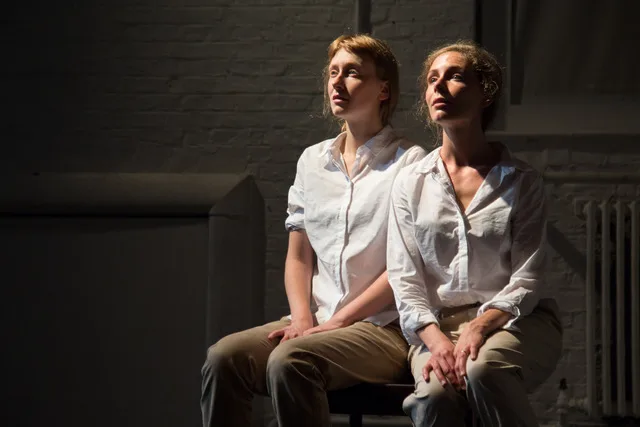
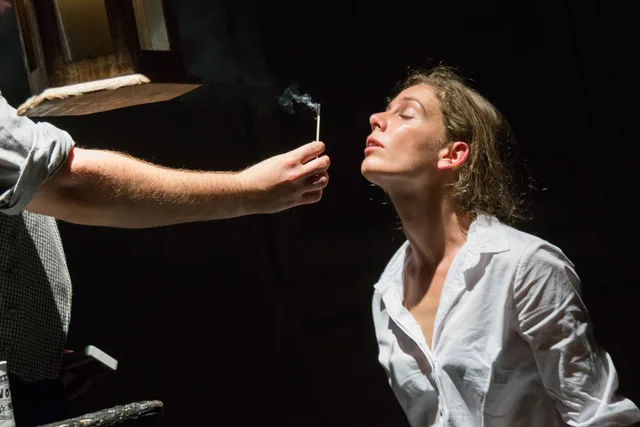
The Little Prince (2013-2016) was a long-term practice research project led by Cass Fleming and undertaken by The Chekhov Collective.
The Little Prince explored selected research questions that were posed in the Michael Chekhov in the Twenty First Century: New Pathways Research Project. This project interrogated and experimented with difficult to access archival materials[1] held on Chekhov’s early work in devised theatre practice and his approach to direction. This material had not been addressed in Chekhov’s published texts but holds significance in a twenty first century context. A number of performance-based outputs and public discussions were shared with various audiences disseminating the new insights into the technique, field of practice and critical scholarship developed.
- 2015. ‘Michael Chekhov in the Twenty First Century: New Pathways. The Little Prince in Process’. Presented by Cass Fleming with Roanna Mitchell, Tom Bostock, Alistair Foylan and Phoebe Naughton from the Collective at the Performance Research Forum Dis-Play. Goldsmiths, University of London.
- 2016. Public scratch performance of The Little Prince including post-show discussion and qualitative questionnaires, Queen Mary, University of London.
- 2016. Public work in progress performance of The Little Prince including post-show discussion, Goldsmiths, University of London.
- 2016. Public research and development performance of The Little Prince including a post-show discussion, Goldsmiths, University of London.
Chapter one of Michael Chekhov in the Twenty First Century: New Pathways (2020, Fleming, Bloomsbury Methuen Drama) discusses aspects of this work and related methodological and theoretical aspects of our research process and findings. It also reproduces a selection of the archival materials that we directly used in our work.
[1] The Deirdre Hurst du Prey Chekhov Theatre Studio Archive, held by the Dartington Trust.


The Little Prince
A story about love and loss.
A story about the extraordinary and funny business of being an adult.
Above all, a story about hope.
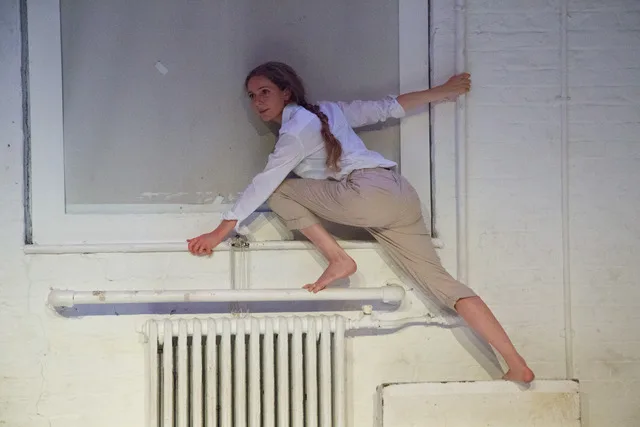
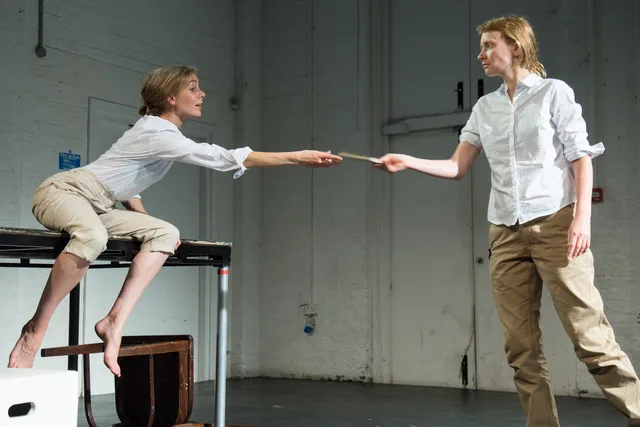
This surprisingly queer and delicately physical re-telling interweaves material from Saint Exupery’s well-loved novella The Little Prince with his writings on travel and war, and takes inspiration from the life of pilot Amelia Earhart.
Although The Little Prince is often framed as a children’s piece, our version is for adults, and the children they remember themselves to be.
Directed by: Cass Fleming
Cast: Thomas Bostock, Sian Clarke, Alistair Foylan, Katja Hilevaara, Joshua MacLellan, Roanna Mitchell, Phobe Naughton
Devised by: The Chekhov Collective
Adapted from Antoine de Saint-Exupery by The Chekhov Collective
Lighting Design: Dadiow Lin
Projection and Scenography: Francesca Castelbuono and The Chekhov Collective
Sound Design by The Chekhov Collective
Running time: 80 minutes
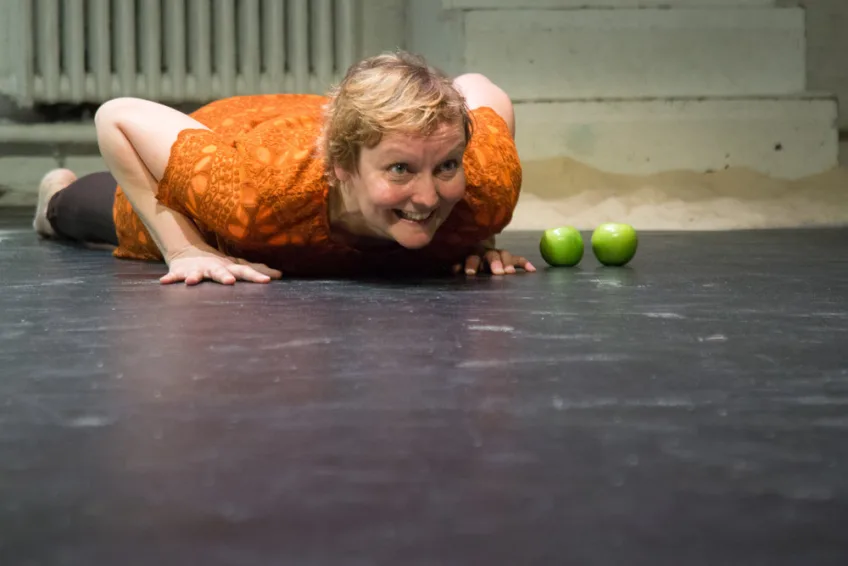

The making of The Little Prince
This project began in 2013 with an initial phase of outreach work when Cass Fleming was invited to run a workshop on Chekhov Technique for directors at the Royal National Theatre Studio, with the assistance of a former student, Rebecca Frecknall. This was the first time the Studio had used this radically actor-centred technique with their directors and despite it being markedly different to many of the other approaches offered by the studio it was a considerable success. Many of the directors asked why they had not come across the method being used for directorial practice before and wanted to find out more about it.
Later that year, Cass Fleming brought together a group of practitioners who had previously trained in Chekhov Technique and were using it in their practice in different ways. This was to become The Chekhov Collective. A larger group of practitioners was involved at different stages of the practice research project; all are experienced in devised theatre making and many were also directors. They included: Tom Bostock (actor and director), Francesca Castelbuono (film director/maker), Sian Clarke (writer and performer), Derek Elwood (actor), Bryn Fitch (puppeteer), Alistair Foylan (actor and director), Rebecca Frecknall (director), Melody Parker Grome (director and playwright), Katja Hilevaara (performance maker, teacher and scholar), Hanna Junti (movement director), Joshua MacLellan (actor), Saskia Marland (actor and theatre-maker), Joe Mercier (set designer/maker), Roanna Mitchell (Movement Director, teacher and scholar), Phoebe Naughton (actor and director), Holly Shuttleworth (producer) and Chloe Stephens (director and teacher). A core group formed to continue working on the archival materials and research questions on a part-time basis over the next two years, with members of the wider collective returning to give support at different points in the process. The core group became Tom Bostock, Sian Clarke, Alistair Foylan, Katja Hilevaara, Joshua MacLellan, Roanna Mitchell and Phoebe Naughton.
The first phase involved a series of exploratory workshops considering issues related to using Chekhov technique for devised theatre making and direction in relation to selected archival material. From this creative and critical exploration we were able to more clearly define specific research questions. The second phase began in 2014 and the Collective met for workshop on a regular part-time basis to continue to train and undertake this research. Between 2014 and 2016 The Collective shared the results of their practice and research experiments at various points and finally as a research and development performance of our work at the New Pathways public events in September 2016.
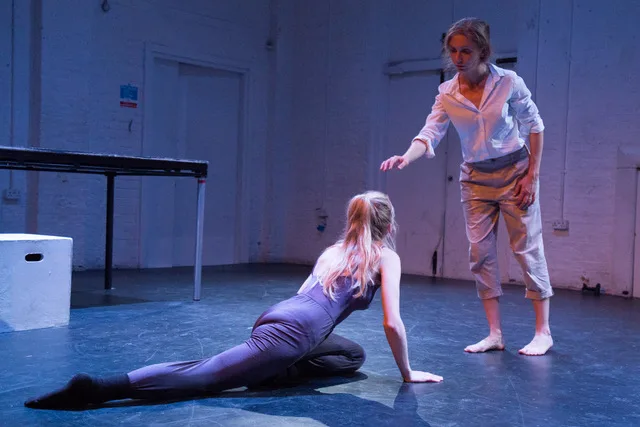
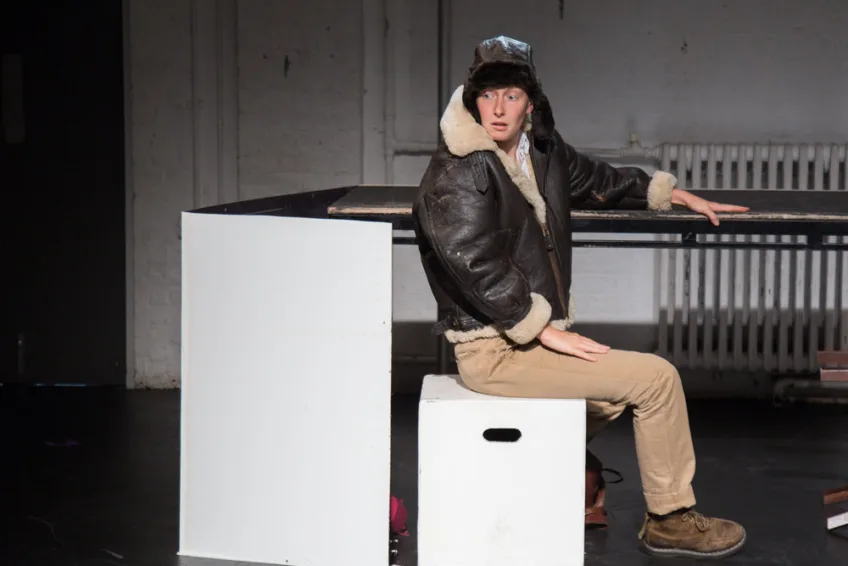
Research questions
As part of the first phase of our work The Collective considered the following questions:
- What is attractive about the technique and why do we find using these methods helpful and exciting in our practice in the twenty first century?
- How do we modify, blend and transform Chekhov’s techniques in our work?
- What are the problems we have faced when using Chekhov technique in the twenty-first century? If we are selective or adaptive in what we use, why?
- How could we use archival materials to give us further ideas on how to devise and work as directors?
- What attracts us in the materials gathered from the archives and why?
We established that the different members of the Collective were using Chekhov technique in a wide variety of ways. This ranged from directing both devised and text-based work, making devised performance, site responsive and site specific work, it was also being used for movement direction, theatre for and with children, live art practice, street performance, clowning, film making and writing for performance. Within the Collective we were often blending Chekhov technique with other methods, to a greater or lesser degree. Some practitioners were explicit about their use of Chekhov technique; others did not foreground this in all of their professional work.
We were attracted to various aspects of the technique but overall we were drawn to the fact that it is a psychophysical, actor-centred and ensemble practice. We were all drawn to the fact that the embodied imagination is centralized and that it frees us from the use of personal memories and encourages creative transformation and an engagement with otherness. At the same time, a key strength was seen to be the way in which the technique works equally with textual and non-textual, devised and non-devised, performance. A key finding of our research was the way in which Chekhov Technique provided a continuum of practice rather than an either/or approach and that this was very helpful to contemporary directors and devised makers. The other attraction was that we found it to be a very flexible and accessible technique. At the same time we critiqued various terms and concepts that did not sit well with our twenty-first century perspectives, and our experiences of identity politics (for example issues relating to race/ethnicity, gender and sexuality) and discussed how certain changes in terminology, or contextulisation of terminology, was needed.
Symbiotically, we started to focus the workshops on more defined research questions and refined our focus to a smaller selection of archival materials and other sources. Our research questions became:
- How could we use archival materials to give us further ideas on how to devise and direct devised theatre making processes? How could we explore, understand and interpret these methods and the way in which the technique appears to work in these contexts?
- How could we explore Chekhov’s interest in non-Naturalistic performance and examine his work on cross-cultural Fairytales, Folktales, Myths, Scenarios and forms such as Commedia dell’Arte? What text might we use as a starting point and how will we approach non-human characters, forms of non-Naturalistic story-telling and worlds that are ‘magical’ and possibly ‘queer’. What might this be important and relevant about this to contemporary devised practice?
- What kind of direction is needed, or encouraged, by this use of Chekhov technique in a devised process?
- What does this do / require in terms of the relationship between a devising director and the ensemble? What are the politics and ethics of this?
- Are there shortcomings or challenges in using specific techniques (developed in the early twentieth century) in contemporary practice and in relation to current understandings of identity and politics?
- What do we want or need to blend the technique with and why?
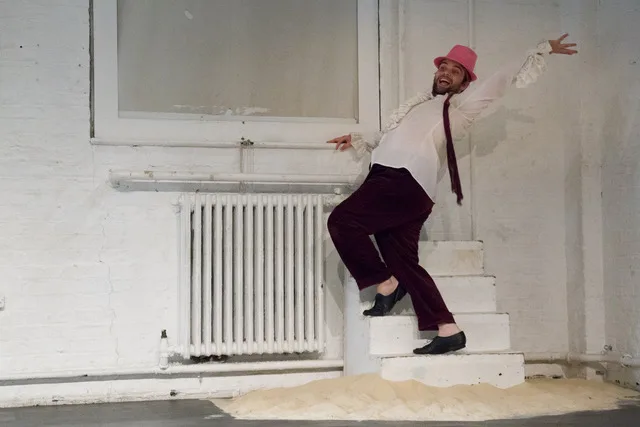
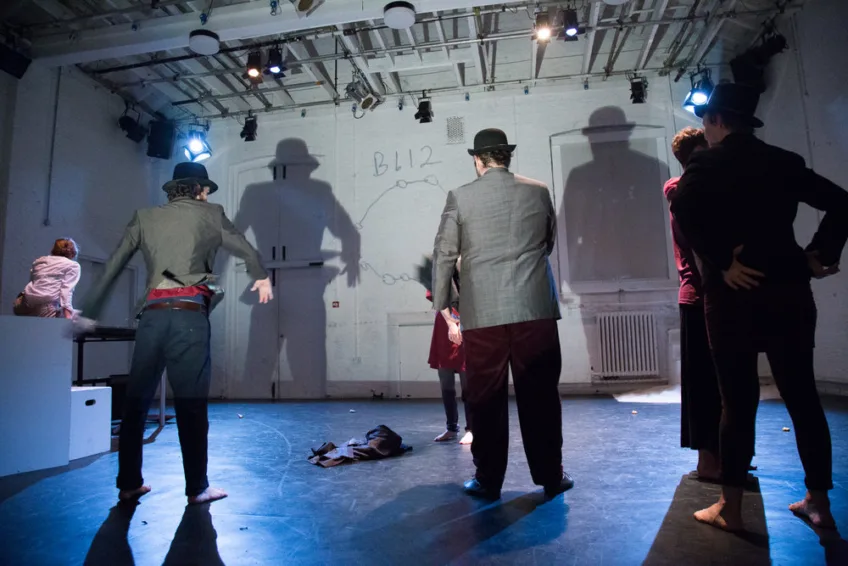
Early experiments
Our research was not concerned with a re-construction, or contemporary re-staging, of one of the devised projects created at the Chekhov Theatre Studio, or with producing a polished final production. Rather it was to be a process-led project, in a manner similar to Chekhov’s approach at the Michael Chekhov Theatre Studio at Dartington.
To the first exploratory sessions Cass brought with her an extensive range of sources from the archive that addressed devising, teaching and directorial practices that Chekhov and his collaborators were using at the studio. Some materials were obviously about devised and directorial practices; others had tangential connections or provided only a tantalizing hint about some form of practice. Some records were partial and some were more extensive. In additional to written sources including the transcribed lessons and lectures, we had images, sketches, charts, rehearsal and working notes and diagrams. We started by sharing and exploring the archival materials, which we approached as treasures, or toys, to be engaged with through the embodied imagination in the first instance, followed by critical discussions – what Chekhov calls ‘spying’ back. The final selection of archival materials focused on Chekhov’s productions, project and sketches that were based on less densely textual sources. We consequently focused on projects that were based on fairy/folk stories, tales and scenarios and decided to use Saint Exupery’s novella The Little Prince as the stimulus for a devised production.
Areas that our practice research subsequently covered included: (i) Non-Naturalistic and fantastic stimuli material and Chekhov’s related use of Commedia dell’Arte, play, mask and clowning. (ii) The Principles, qualities and ethics that Chekhov believed underpinned their devised practice (iii) The various devised and directorial methods they used, in particular the use of what Chekhov defined as ‘grounds’ and ‘spines’ and his cyclical process of material development; (iv) the types of embodied theatre and embodied dramaturgy that their devised practice led to; and (v) questions about the ownership of collaborative work and the challenges to theatre-making hierarchies
Our methodological approach to exploring the archival sources was varied. As we did not believe we were trying to find one historically correct application, or a pure essence of practice or a method (Foucault 1977), we playfully enjoyed a diversity of approaches in order to intentionally ‘enter into a dialogue with the archive’ (Mayo in Shaughnessy 2012). In this we were led by Chekhov’s own approach, and that of his students, often led by trial and error. The four creative approaches for working with archival material developed by Mayo were all utilized; plunging in deeply to the archive; bouncing off the material to inspire new work; exploring a question or theme to create a trail through the archive; and entering into dialogue with the archive (ibid). We also reflected on our dialogue with these materials, each other, and the work of other practitioners working in this field and what this may offer theatre practitioners working today. The performances, exchanges and discussions with audience members and workshop/lecture participants also added to the development of this work and our ideas over these three years. Derrida (1995) argues that in addition to looking back to the past archives also give us ways to imagine the future, and this is something that we sought to actively engage with in creative terms and we hope that our work has made Chekhov’s archives, and our practice research, accessible and relevant to contemporary theatre-makers in the twenty first century.
To read more about our work on The Little Prince and the research findings take a look at chapter one of Michael Chekhov in the Twenty First Century: New Pathways (2020, Fleming in Fleming & Cornford, Bloomsbury Methuen Drama).
The Chekhov Collective has grown and diversified since this work on The Little Prince and continues to develop. The Collective hosts a wide range of practice/research events and we hope that you might like to join us at one of these in the future. Click here for forthcoming events.
References
Derrida, J. (1995), Archive Fever: A Freudian Impression, Baltimore: John Hopkins University Press.
Fleming, C. (2020) ‘Chekhov Technique: Past, Present and Future’ and ‘Theatre of the Future’ and ‘Chekhov Technique for Devised Theatre and Catalyst Directing’ in (eds.) Fleming & Cornford Michael Chekhov in the Twenty First Century: New Pathways (London & New York: Bloomsbury Methuen Drama).
Foucault, M. (1977), Language, Counter-memory, Practice, Bouchard, D. (ed.), New York: Cornell University Press.
Hurst du Prey, D. Deirdre Hurst du Prey Michael Chekhov Theatre Studio Archive, Dartington Hall.
Shaughnessy, N. (2012), 6.3 ‘Participant Centred Pedagogy and the Affecting Learning Environment: LIFT 2011’, in Applying Performance: Live Art, Socially Engaged Theatre and Affective Practice. Basingstoke: Palgrave, 209–24.