Chekhov Technique: Directing and Theatre-Making
This page gathers together various aspects of The Chekhov Collective’s research exploring Michael Chekhov’s technique in the context of directing theatre on a broad continuum that includes play texts, adaptations, devised and physical theatre and site-specific performance.
This work has developed out of Cass Fleming’s practice and research since 1997 and partnerships and exchanges among a number of artists and scholars in the field since 2013, including the founder members of The Chekhov Collective, who are referred to below and/or in associated publications.
Whether you come here as an artist, scholar, teacher, or all of those, we hope the information collated here is useful to you.

Introduction
Cass has worked in theatre, opera, film and television since 1984. From 1997, when Cass was first introduced to a series of Chekhov exercises at the Royal Central School of Speech and Drama as a post-graduate student specialising in directing, she has been using it in her own work as a director and as a teacher of actors, directors, choreographers, devised theatre makers, scenographers and applied theatre practitioners. Since this time, she has been on a journey to learn more about the technique developed by Chekhov along with his underlying social, inter-personal and artistic principles to explore and question how these might work in contemporary theatre practice and training.
She was particularly interested in Chekhov’s firm belief that directors need to undergo training, have methods for use in their own work, and that this needed to include their development as a creatively individual artist. Chekhov also believed that directors need to develop a high level of relational skill in inter-personal communication and facilitation with all their collaborators, and to actively recognise and celebrate all actor’s creative individuality/difference. His practice also sought to give them agency as artists in their own right, and to work with ethical awareness.
This resonated with Cass’s creative and political ideas and her identity as a feminist queer artist and underpins her work in these earlier years, and her later work as the Founder of The Chekhov Collective.
Beginnings: Michael Chekhov Technique for Directors and Devised Theatre-Makers
From 2013, Cass Fleming took the lead on a strand of research investigating the use of Chekhov technique for Directors and as a method for Devised Theatre Making, as part of the New Pathways project.
She founded The Chekhov Collective to explore this strand of the practice-research project.
The explorations for this strand considered questions such as:
- Why did Chekhov believe in training directors and what methods did he provide for them to use in their process?
- What might be important and relevant about a use of Chekhov Technique to contemporary directing and devised theatre practice in the C21st?
- How could we use archival materials to give us further ideas on how to direct and devise theatre?
- What kind of direction is needed, or encouraged, through a use of Chekhov Technique and what does this require in terms of the type and quality of relationship between a director and ensemble?
- What are the politics and ethics of a use of Chekhov Technique in directing practice?
- Are there shortcomings or challenges in using specific techniques in contemporary practice and in relation to current understandings of identity and politics?
- What do we want, or need, to blend the technique with and why?
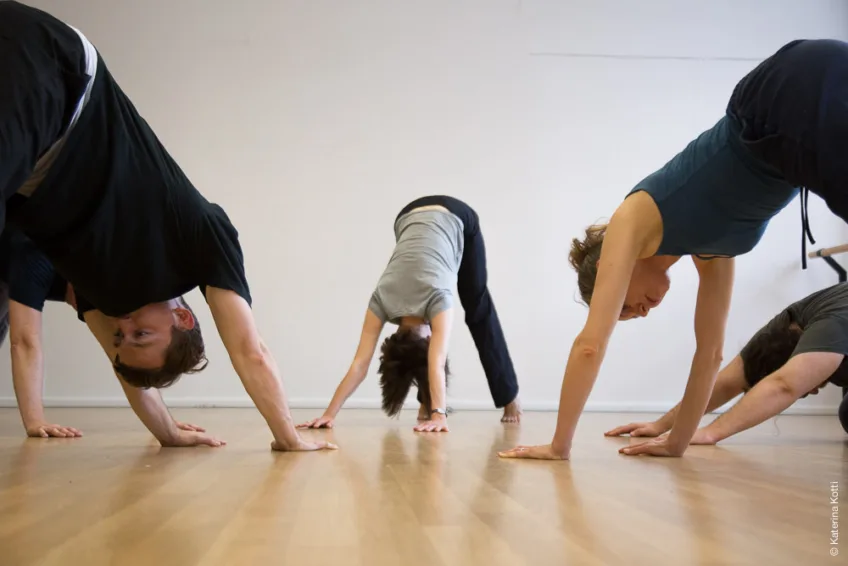

These questions were pursued with the aim to advance contemporary developments towards directorial practice and training, devised making, and as a form of creative and critical historiography.
Research for this strand of the New Pathways project was conducted through a combination of archival research, long-term practice-based research carried out by The Chekhov Collective, workshops for professional directors, and various exchanges, and it culminated in:
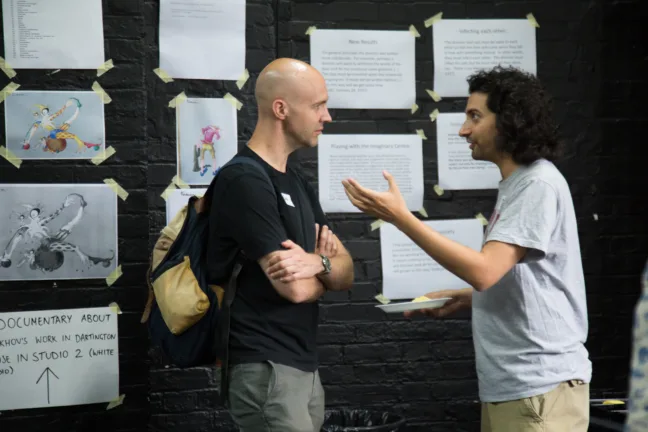
- A praxis symposium session as part of the New Pathways Research Events (9-11 September 2016) held at Goldsmiths led by Cass Fleming and members of the Collective.
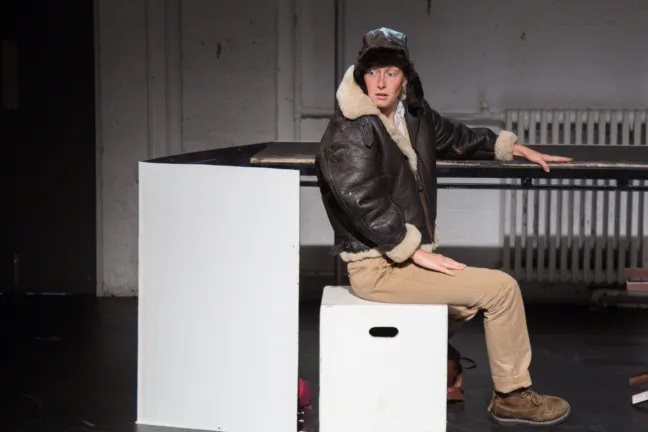
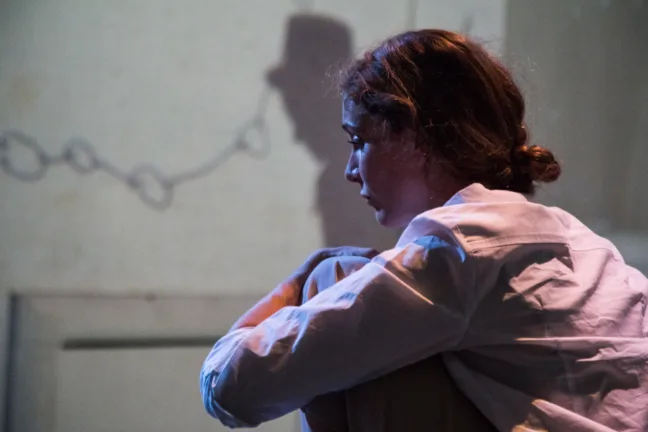
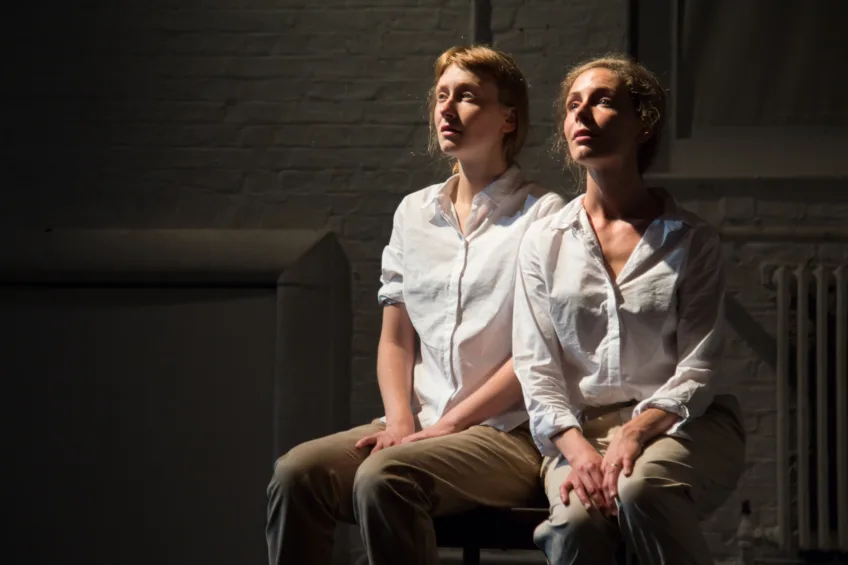
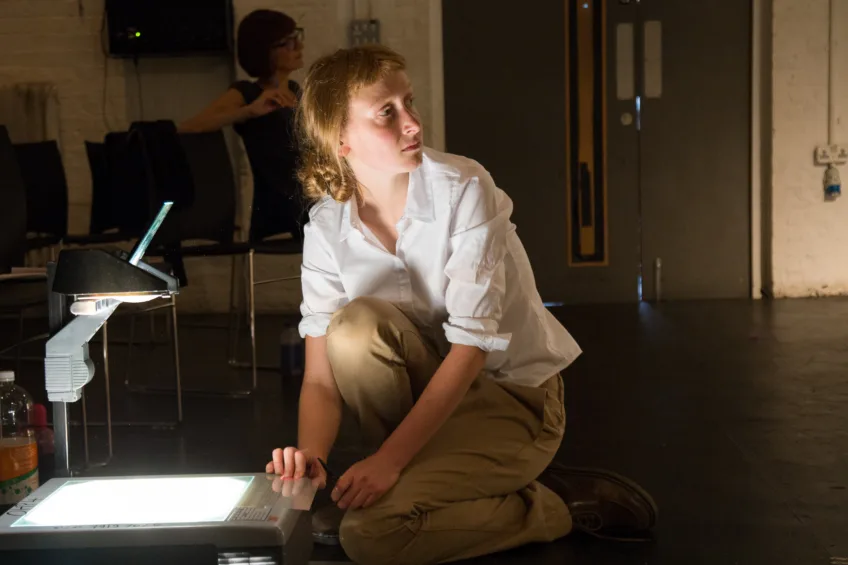
- A series of performances of the practice research project, The Little Prince, created by the Collective and Directed by Cass Fleming. 9 September 2016.
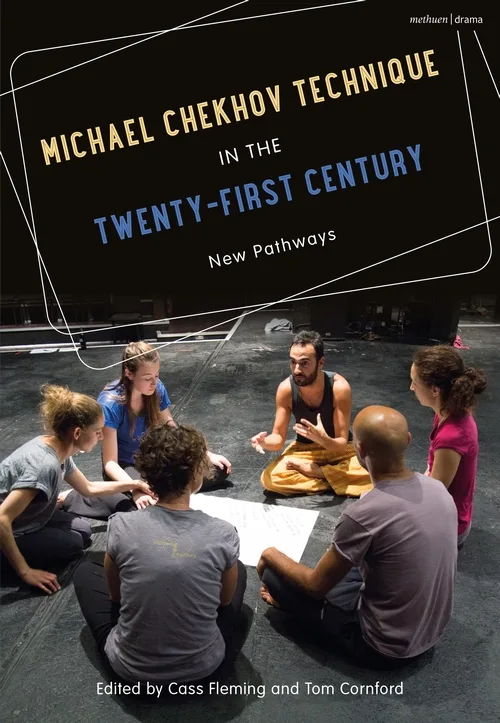
- A chapter in Michael Chekhov in the Twenty First Century: New Pathways by Cass Fleming. (eds. Fleming & Cornford 2020)


Resource: The resulting chapter by Cass in the book Michael Chekhov Technique in the Twenty-First Century: New Pathways (eds Cass Fleming and Tom Cornford, 2020)
Practice Research: The Little Prince
The Little Prince (2013-2016) was a long-term practice research project led by Cass Fleming and undertaken by The Chekhov Collective. The project explored selected research questions related to using Chekhov Technique for Directing and Devised Theatre Making that were posed in the Michael Chekhov in the Twenty First Century: New Pathways Research Project.
This project interrogated and experimented with archival materials from the Michael Chekhov Theatre Studio, developed by Deidre Hurst du Prey and held by the Dartington Hall Trust, on Chekhov’s early work in directing and devised theatre practice. This material had not been addressed in Chekhov’s published texts but holds significance in a twenty first century context.
The initial phase of outreach work for this project began when Cass Fleming was invited to run a workshop on Chekhov Technique for directors at the Royal National Theatre Studio in 2013, with the assistance of a former student, director Rebecca Frecknall. This was the first time the Studio had used this radically actor-centred technique with their directors and despite it being markedly different to many of the other approaches offered by the studio it was a considerable success. Many of the participants asked why they had not come across the method being used for directorial practice before and wanted to find out more about it.
Later that year, Cass Fleming brought together a group of practitioners who had previously trained in Chekhov Technique and were using it in their practice in different ways. This was to become The Chekhov Collective. A larger group of practitioners was involved at different stages of the practice research project including: Tom Bostock; Francesca Castelbuono; Sian Clarke; Derek Elwood; Bryn Fitch; Alistair Foylan; Rebecca Frecknall; Melody Parker Grome; Katja Hilevaara; Hanna Junti; Joshua MacLellan; Saskia Marland; Joe Mercier; Roanna Mitchell; Phoebe Naughton; Holly Shuttleworth and Chloe Stephens. A core group formed to continue working on the archival materials and research questions on a part-time basis over the next two years, with members of the wider collective returning to give support at different points in the process. The core group became Cass, Tom, Sian, Alistair, Katja, Joshua, Roanna and Phoebe.
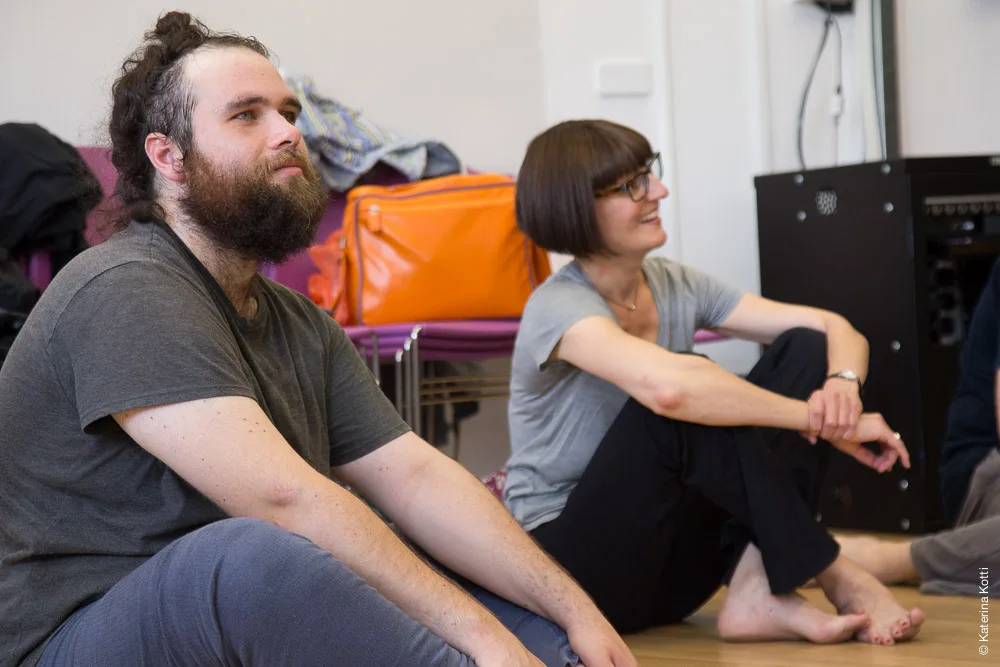
From 2014 the Collective met on a regular part-time basis to continue to train and undertake this research. Between 2014 and 2016 the results of our practice research were shared with different audiences and participants at various points, and in different formats.
The Little Prince: Process and research findings
We established that the different members of the Collective were using Chekhov Technique in a wide variety of ways. This included directing both play texts and devised work, making devised performance, and site-responsive and site-specific work. It was also being used for movement direction, theatre for and with children, live art practice, street performance, clowning, film making and writing for performance. Within the Collective we were often blending Chekhov technique with other methods, to a greater or lesser degree. Some practitioners were explicit about their use of Chekhov technique; others did not foreground this in all of their professional work.
We were attracted to various aspects of the technique but overall, we were drawn to the fact that it is a psychophysical, actor-centred, collaborative and ensemble practice. The fundamental principles of collaborative working practice, giving actors agency as artists and celebrating each company member’s Creative Individuality (i.e. difference and identity), appealed to us in relation to the way this could facilitate a contemporary practice which seeks to be creative, inclusive and diverse. We were all drawn to the fact that the embodied imagination is centralized and that the technique frees us from the use of personal memories and encourages creative transformation and an engagement with otherness.
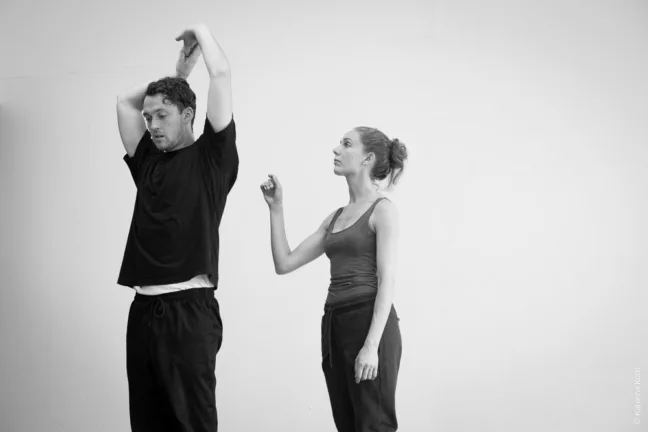
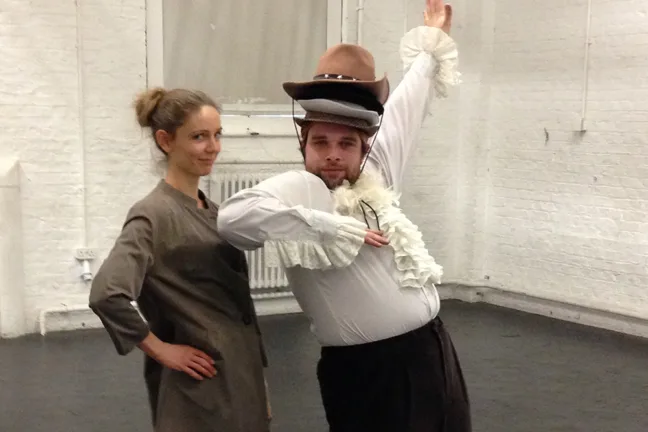
A key finding of our research was the way in which Chekhov Technique as a tool for directing worked equally well across a continuum of theatre practices. We found that a use of the Technique provided directors with the skills and principles to not only direct existing play texts and carry out embodied dramaturgical analysis, but to creatively adapt plays, to create new material for existing plays, and devise entirely original material. Moreover, our work on the Little Prince clearly demonstrated the way in which these tools can equally be used by a director for physical performance, dance, performance art, and clowning. The technique therefore offers directors (and choreographers) a flexible and shared language with their companies to work in various different forms and styles of performance. This was a crucial finding in the context of twenty first century practice because as Duska Radosavljević noted in 2013 much contemporary theatre practice in the UK no longer sits in a neat binary of ‘Text’ or ‘Performance’, and directors therefore need the skills to embrace the shift we have witnessed in the past thirty years. This finding determined the expansive focus of The Chekhov Collective as a Practice Research Centre.
At the same time, we critiqued various terms and concepts that did not sit well with our twenty-first century perspectives, and our experiences of identity politics (for example issues relating to race/ethnicity, gender and sexuality) and discussed how certain changes in terminology, or contextulisation of terminology, was needed.
Our research was not concerned with a re-construction, or contemporary re-staging, of one of the devised projects created at the Chekhov Theatre Studio, or with producing a polished final production. Rather it was to be a process-led project, in a manner similar to Chekhov’s approach at the Michael Chekhov Theatre Studio at Dartington.

The Little Prince: Working with the archive
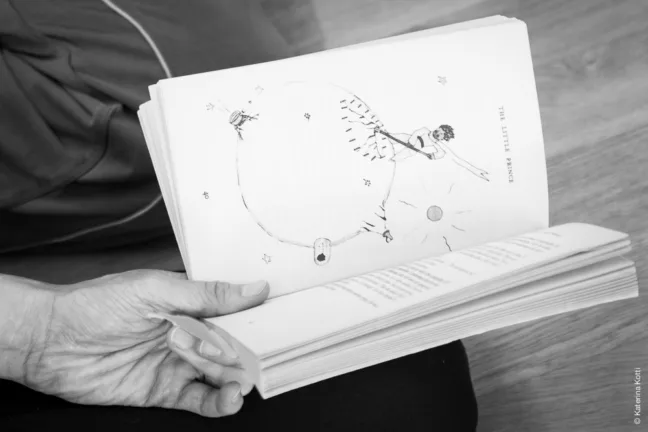
We worked with an extensive range of sources from the archive that addressed the directing, devising and teaching methods that Chekhov and his collaborators were using at the studio. We decided to focus on the Michael Chekhov Theatre Studio’s work on projects that were based on fairy/folk stories, tales and scenarios as a basis of much of their devised and scripted materials and decided to use Saint Exupery’s novella The Little Prince (1943) as the stimulus for our devised production.
Areas that our practice research subsequently covered included:
- The various directorial and devised methods that Chekhov and his collaborators used at Dartington, in particular the use of what Chekhov defined as ‘grounds’ and ‘spines’, his cyclical, non-linear approach to rehearsals and other creative methods of developing the material of a scene and an overall dramaturgy;
- The principles, qualities and ethics that Chekhov believed underpinned directorial and devised practice;
- Non-Naturalistic and fantastic stimuli material and Chekhov’s related use of folk tales, fairy tales and myths, play, mask, clowning and Commedia dell’Arte;
- The types of embodied theatre and embodied dramaturgy that their devised practice led to;
- The queer dramaturgy that we developed in our own practice in relation to the use of Chekhov’s methods; and
- Questions about the ownership of collaborative work and the challenges to theatre-making hierarchies


The Little Prince: Outputs
The practice-based research outputs and events that Cass Fleming and members of The Collective shared between 2014 and 2016 included: Workshop for Directors at the Royal National Theatre Studio, Cass Fleming with Rebecca Frecknall (2013); Presentation ‘The Little Prince in Process’ at Performance Research Forum Dis-Play (2015); Lecture on the use of Chekhov Technique by Directors at the Young Vic Theatre (2016); Master Class on the use of Chekhov Technique by Directors at the Young Vic Theatre (2016); Public scratch performance of The Little Prince including post-show discussion and qualitative questionnaires, Queen Mary, University of London (2016); The Little Prince, Work in Progress Performance and Post-Show Discussion, Goldsmiths, University of London (2016); and The Little Prince, Research and Development Performance presented at the New Pathways Research Events, Goldsmiths, University of London (2016).
Resource: Chapter one of the book Michael Chekhov Technique in the Twenty-First Century: New Pathways (eds Cass Fleming and Tom Cornford, 2020) written by Cass Fleming discusses this practice based work in detail and also reproduces a selection of the archival materials used in the work.
Practice Research: New Forms of Director Training and Studio Experiments
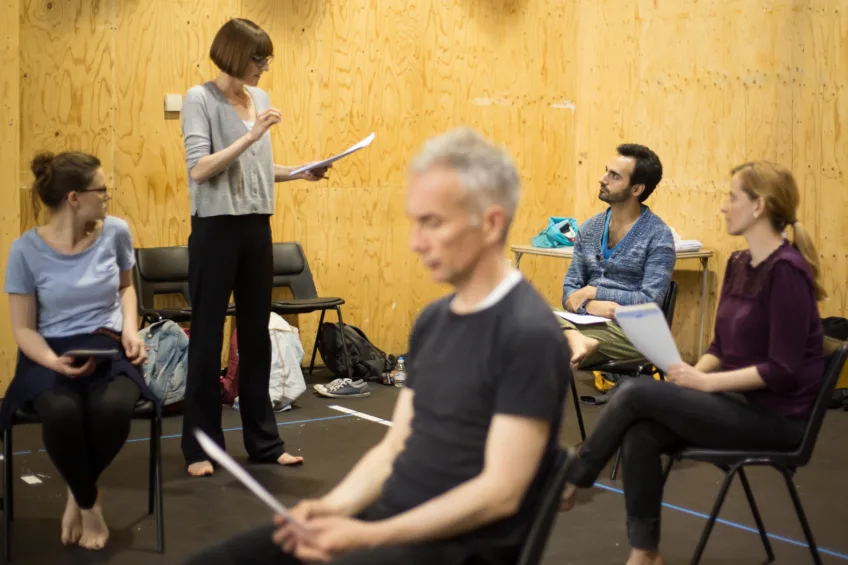
Since 1997, Cass Fleming has been drawing on Chekhov Technique for her own directorial practice. Since this time, she has also embedded aspects of this in her practice-research and pedagogic approach as a trainer of actors, directors, choreographers and devised theatre makers at Royal Central School of Speech and Drama, Rose Bruford College, Brunel University, Goldsmiths University of London and E15 Acting School. The technique spoke to her interest in collaborative, actor-centred, feminist and queer theatre making practice in a number of exciting ways that felt helpful in a contemporary context. She has also blended this with an interest in Suzanne Bing Technique, the work of Joan Littlewood, and various approaches and methods used in socially engaged and therapeutic theatre practice. Between 2000 and 2013 she explored the use of play in actor and director training and theatre making in the work of Michael Chekhov and its points of synergy with the practices developed by Suzanna Bing in France for her doctoral research.
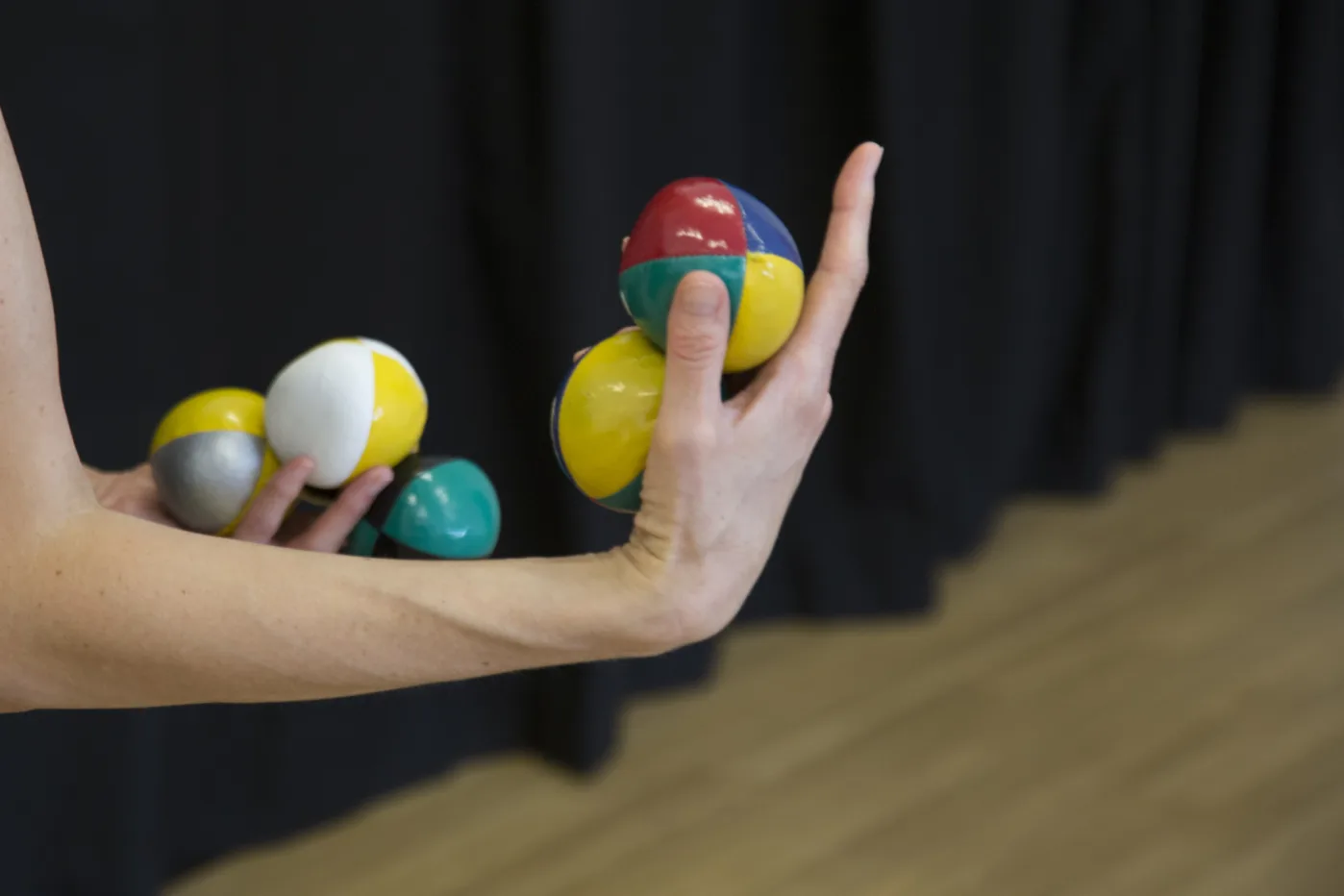
Resource: You can access the thesis for free here. You can also watch a short interview with Cass created by Faculti on the work of Suzanne Bing and her female collaborators here. Cass’s article discusses Chekhov’s use of the ‘Juggler Psychology’ which relates to the centrality of play in his work. This can be accessed free here (N.B. this article is written in Portuguese first, followed by an English translation).
From 2013 Cass has drawn heavily on her scholarly and practice research into the Dartington archives to learn more about the ways in which Michael Chekhov used his technique for directing practice, the training of directors, and devised theatre making. This aspect of his work is not fully discussed in his publications and, as Franc Chamberlain noted, what is included as a chapter in Chekhov’s To The Actor (2002) is slightly ‘out-of-kilter’ with his overall approach and ‘something of an afterthought to his main body of theory’ (Chamberlain, 2000: 92). Chamberlain claims that the four stages of the creative process outlined in On the Technique of Acting (1991) is more useful in this respect.
It is also important to note that before his death Chekhov reportedly started working with Charles Leonard on another book for directors and writers which Leonard published posthumously as Michael Chekhov’s To the Director and Playwright in 1984. However, whilst this publication is said to be ‘compiled and written’ by Leonard some of the chapters are written versions of Chekhov’s lectures that were recorded in the 1950s for audiences made up of largely actors, and other writings or recorded conversations. Other chapters are evidently written by Leonard and it is hard to know if it totally reflects shared opinions with Chekhov, or whether at certain points it is his own position that he is articulating. So, while this book is full of wonderful material, we need to be cautious in seeing this as an actual guide for directors. Delving into the archive helped to fill this gap in knowledge and understanding about Chekhov’s directorial and devised methods.
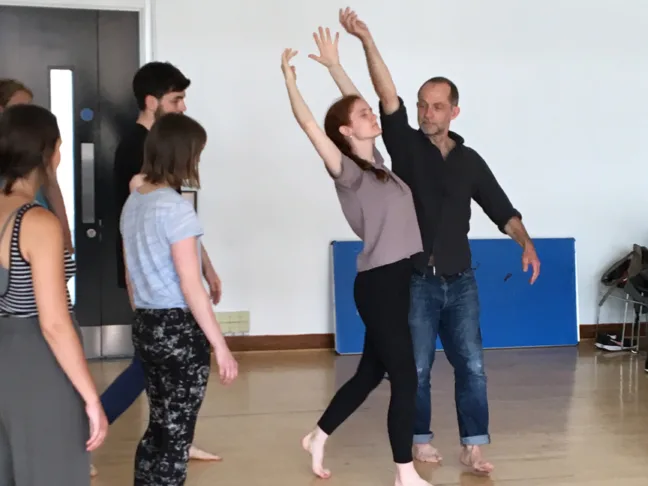
Cass has shared her practice research and her method of director training based on this work with a wide range of directors both inside and outside the academy. This has included her pedagogic work at Goldsmiths since 2004 with Undergraduate, Post-Graduate and PhD students, a workshop for directors at the Royal National Theatre Studio and The Young Vic Directors’ Programme and two full week workshops offered by The Chekhov Collective (Directing with Chekhov Technique 2021, Director’s Workshop 2023). She has also delivered this week-long programme for the MA Directing at E15 Acting School (2022, 2023).
In addition, Cass offers ongoing mentoring and support for a large group of directors and makers who are using MCT in different ways and combinations in the UK and other parts of the world.
In 2023 Gretchen Egolf and Cass Fleming also ran an Open House workshop which explored the use of Chekhov Technique for Dynamics in Scene Work for both directors and actors.


Michael Chekhov Technique: Collaborators and Guest Artists


From 2018 The Chekhov Collective hosted a wealth of additional practice research events, presentations, panel discussions and workshops exploring Chekhov Technique in relation to Directing Practice and Devised Theatre Making. Often Chekhov Technique was used in dialogue with other methods and approaches and each practitioner based their offering on ongoing work and practice research.
These included: two workshops on Chekhov, the Grotesque, and the Fantastical I (2018) and II (2019) led by Tom Bostock exploring his work with site-specific performance company GRUFF; Chekhov and The Chorus (2018) led by Rebecca Frecknall exploring her extensive work with chorus in performance; a Panel discussion – Directors as Collaborators: On hierarchy, empowerment and kindness in the rehearsal process (2018) chaired by Cass Fleming with Emma Baggot, Francesca Castelbuono and Rebecca Frecknall at the Jerwood Space; Short Film, Performing the Archive (MICHA) directed by Gretchen Egolf (2020); Directing with Chekhov: Round Table Discussion (2021) chaired by Roanna Mitchell with Cass Fleming (UK), Gretchen Egolf, Rebecca Frecknall (UK), Margaret Kemp (USA), Anjalee Deshpande Hutchinson (USA) and Sinéad Rushe (UK); Chekhov Technique and Digital Theatre (2021) Led by Funlola Olufunwa; Reaching for the Stars – Directing / Devising with Michael Chekhov’s Creative Process (2021); Led by Dawn Arnold exploring her devised production of Reaching for the Stars.

Michael Chekhov Technique: Self Directing Solo Performance
Founder member of the Collective, Sian Clark, also shared her practice, and research, on ways of using Michael Chekhov Technique for solo feminist performance, solo comedy and writing in 2018 and 2020. To see more about this strand of work click here.
Michael Chekhov Technique for Directors – Professional and Post-Doctoral Mentoring
Professor Luciana Barone, from the University of Paraná, was supervised by Cass Fleming and worked with the Chekhov Collective on Post-Doctoral research between September -December 2019 in London and January – July 2020 online. Luciana explored two strands of post-doctoral research with Cass. The first strand investigated the integration of Chekhov Technique and Body Mind Centring which led to a practice-based presentation and workshop for the Collective which you can read about here. The second strand involved Luciana having professional mentoring to learn approaches to directing using Chekhov Technique which was applied to a chosen play.
Critical Friends – Directors and Theatre-Makers
The Chekhov Collective is committed to developing new and diversified networks of practitioners to foster exchange, collaboration, support and critical dialogue. We are also committed to developing peer to peer support – particularly for directors from the global majority, women, working class, queer and disabled artists who may not have the networking and financial support offered through attendance at Oxbridge and/or public-school education. In 2021 we ran a session titled Chekhov Collective: Critical Friends, which was a session for Directors, Choreographers, Theatre Makers, Circus Artists, Teachers, Coaches and Applied Practitioners that was led by Cass Fleming and Ro Mitchell. From October 2023 Critical Friends sessions will take place a number of times each term which will be led by Tom Bostock, Sian Clarke and Yasmine Irian Angeni. See current workshops and events for further information.