Chekhov Technique: Actor-Movement and Dance
This page gathers together various aspects of The Chekhov Collective’s research exploring Michael Chekhov’s technique in the context of dance, movement, and dance-theatre crossovers. This work has developed out of partnerships and exchanges among a number of artists and scholars in the field, who are referred to below and/or in associated publications.
Whether you come here as a scholar, artist, teacher, or all of those, we hope the information collated here is useful to you.

Beginnings: Actor-movement and Dance in the New Pathways project
In 2015, Roanna Mitchell took the lead on a strand of research investigating the use of Chekhov technique in actor-movement, dance, and dance-theatre crossovers, as part of the New Pathways project.
The explorations for this strand considered questions such as:
- What does Chekhov Technique offer the dancer?
- What are the historical dialogues between Chekhov Technique and dance?
- How is Chekhov Technique already being used in dance training contexts?
- How do dancers and choreographers in the contemporary moment respond to, harness, and/or develop aspects of Chekhov technique?
- What does Chekhov technique offer for rehearsal processes in the dance-theatre crossover?
- How is Chekhov Technique already employed within drama-school structures, across movement- and acting classes?
- How might it be employed even further within drama-schools that aim toward holistic performance training?

As well as charting some of the uses of Chekhov Technique in these fields in the twenty-first century, these questions were pursued with the aim to advance contemporary developments towards holistic training and cross-disciplinary making processes, both in the respective fields of dance-training and actor-training, and in the multiplicity of making-practices that look to combine the two.
Research for this strand of the New Pathways project was conducted through a combination of archival research, practice exchanges, interviews and a culminating praxis symposium session held at Goldsmiths in 2016, co-led by Roanna and Juliet Chambers (Laban Movement Analyst and Lecturer in Actor Movement and Dance).

Resource: The resulting chapter by Roanna in the book Michael Chekhov Technique in the Twenty-First Century: New Pathways (eds Cass Fleming and Tom Cornford, 2020) features insights from dance- and movement practitioners such as: Juliet Chambers; Sinead Rushe (director-choreographer and pedagogue, UK); Jennifer Mizenko (Laban Movement Analyst and Professor of Movement for the Actor and Dancer, US); Anna Tringham (Lecturer in Movement for Acting, UK); Suzanne Bennett (actor, practitioner and pedagogue, Canada); Kim Chen (Chekhov teacher and actor, Taiwan); Margot Fenley (actor and pedagogue in Music Theatre, Australia); Katie Green (choreographer, UK); Brad Cook (movement director and pedagogue, Canada); and Julie Cunningham (dancer and choreographer, UK).
Developments: Practice Research and Studio Experiments
1. Chekhov and Laban: Investigating the Crossovers


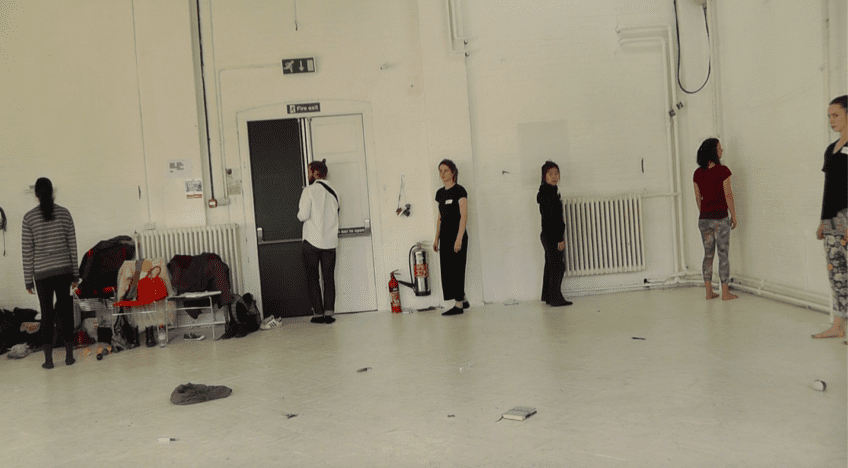
Inspired by the New Pathways project, Juliet Chambers (Laban Movement Analyst, Lecturer in Actor Movement and Dance, founder of the Labanarium) and Roanna undertook a series of practice research investigations exploring the crossovers and dialogues between the practices of Michael Chekhov and Rudolf Laban. These included the initial New Pathways practice symposium (2016); an Open Space practitioner exchange (Goldsmiths, 2016) and an international conference workshop (Laban’s Philosophy and Theatre Practice, Athens 2018).

Resources: Information about the research questions, experiments and key findings of this research can be found here, along with a list of related publications.
2. Chekhov meets Cunningham: Experiments in Contemporary Dance
Between 2015-2017, Roanna undertook a series of practice exchanges with the award-winning dancer-choreographer Julie Cunningham and their company. Cunningham, previously a long-standing member of Merce Cunningham’s company and Michael Clarke Company, now creates their own work with Julie Cunningham & Company, creating radical experiments with dance and text. The latter include To Be Me, set to selections from Kate Tempest’s poetry collection Hold Your Own (Barbican, 2017), and their staging of Sarah Kane’s Crave with four actors and four dancers (Barbican, 2018) co-directed with Joyce Henderson (Associate of Complicité).
The aim of this collaborative research was to discover how elements of Chekhov’s technique might be adopted, developed or adapted for use in making and transmitting contemporary choreography.
Resource: An interview in which Julie reflects on how this work together shaped their approaches to dancing and dance-making can be found on Roanna’s website here.
3. Acting in Dance: approaches for pedagogy and practice
From 2018-2019 the Chekhov Collective hosted a series of workshops on expressive techniques for dancers in interdisciplinary contexts, led by Roanna. These included: Acting in Dance: Qualities of Movement (Goldsmiths, 2018); Expressive Techniques for Dancers I : Preparing for Interdisciplinary work (Chisenhale, 2019); and Expressive Techniques for Dancers II : Gesture (Goldsmiths, 2019).
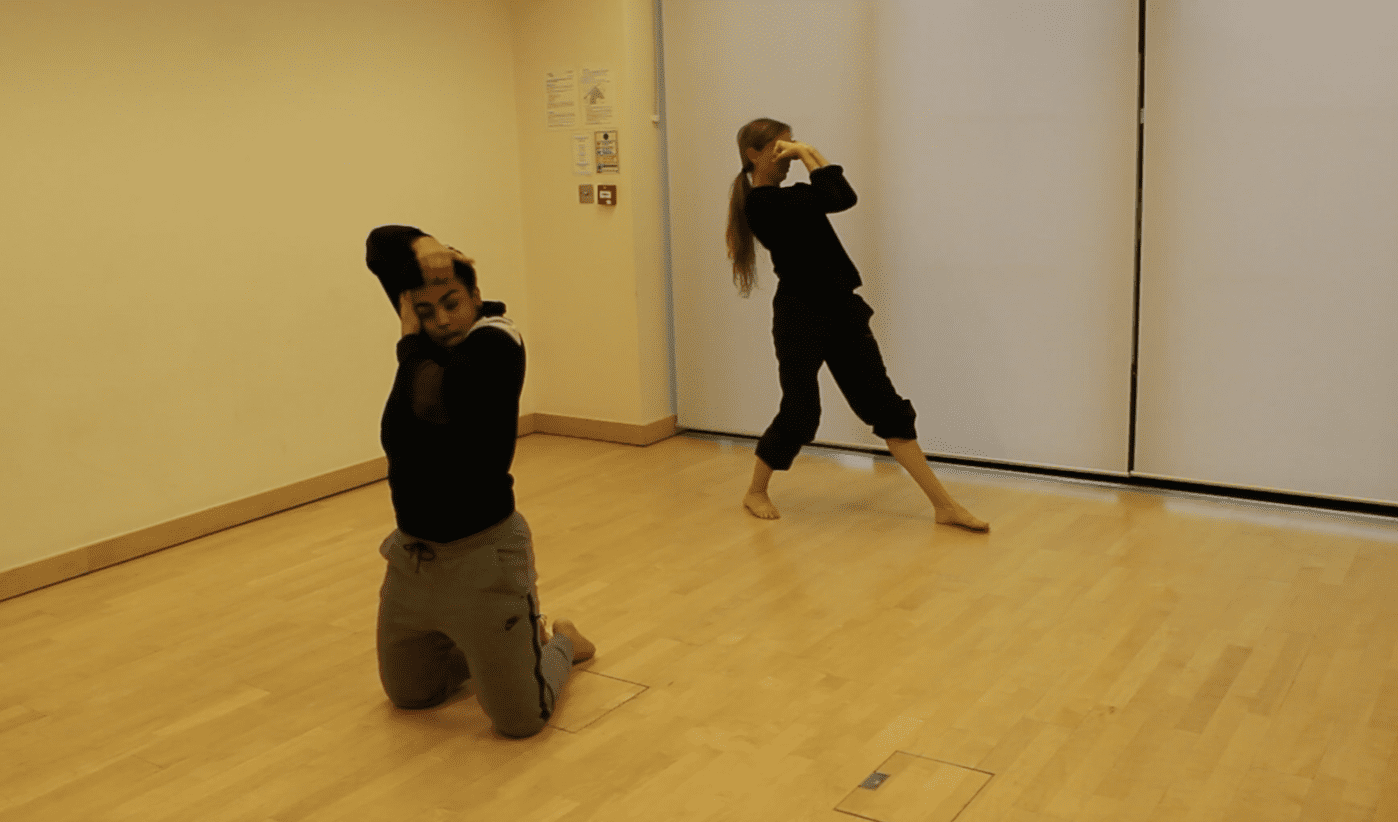
Rather than asking the dancer to set aside their expertise and step into unfamiliar ‘acting’ shoes, these workshops explored how we can achieve acting moments in performance by starting from a dancer’s expertise.
Drawing mainly on the approaches of ‘dancing actor’ Michael Chekhov, as well as linking to the work of Jacques Lecoq and Rudolf Laban, the workshops offered participants tools for their next interdisciplinary project, and/or allowed them to discover further layers to their dance practice.
Roanna also continues to investigate the use of Chekhov technique in physical theatre/dance-theatre pedagogy in her teaching across Undergraduate physical theatre and devising modules and the MA Performance — Physical Acting at the University of Kent, UK.
Resource: More reflections on Chekhov technique as part of teaching physical theatre in HE contexts can be found here.
4. Chekhov and other movement practices
Between 2018 and 2022, the Chekhov Collective hosted a wealth of further practice research events, presentations and workshops exploring Chekhov’s technique in dialogue with a range of other movement practices.

These included Imaginative Embodiment: Michael Chekhov and Jacques Lecoq (2018) led by Cass Fleming and Amy Russell (Director of the School for Embodied Poetics); Chekhov and Body Mind Centring (2019) presented by Luciana Barone (University of Paraná, Brazil); Chekhov Technique and a little bit of Laban (2021) led by Funlola Olufunwa (Actor, Writer and Educator, UK); Is THIS physical theatre? (2021) conversation between Roanna Mitchell and Dawn Arnold (Chekhov Studio Chicago, US); Chekhov Technique in Inclusive Dance Practice (2021) led by Grace Wranosky (Confidance, UK); and Chekhov in the Creative Process of Contemporary Circus (2022) led by Anna-Katharina Andrees (7 Women Company and Michael Chekhov International Academy, Berlin).


Chekhov and Dance: Historical Perspectives
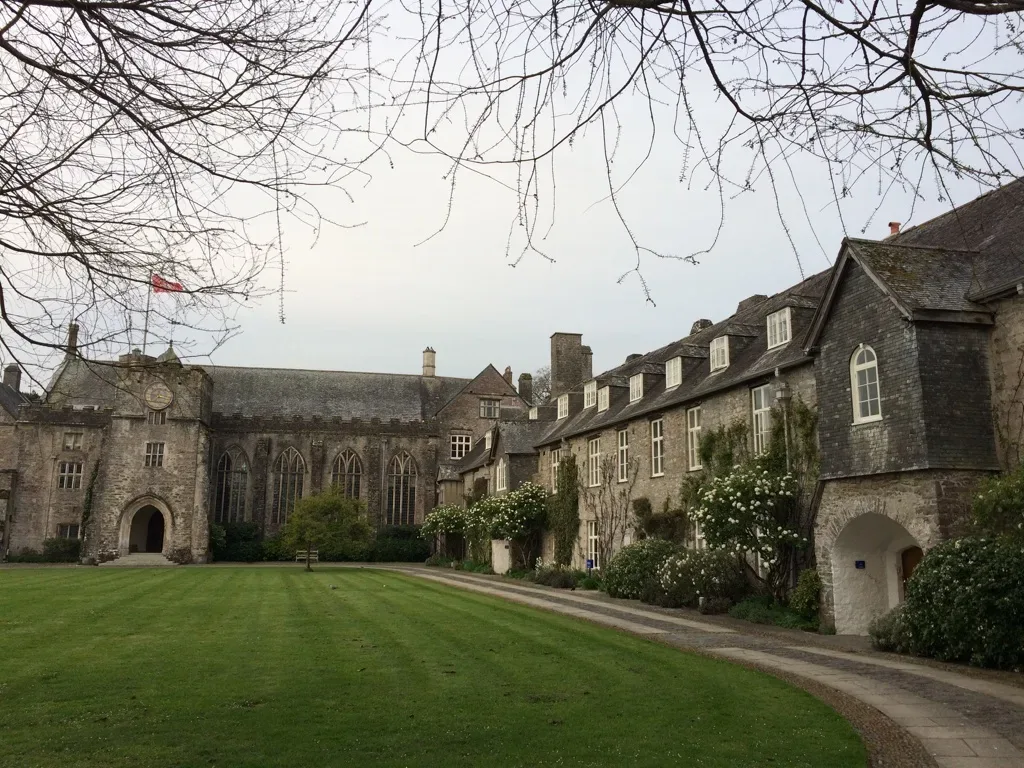
In 2020, Roanna published an article exploring the way that Chekhov’s technique was embedded in a rich web of dialogues and intersections between acting- and dance/dance-mime practices in the early twentieth century.
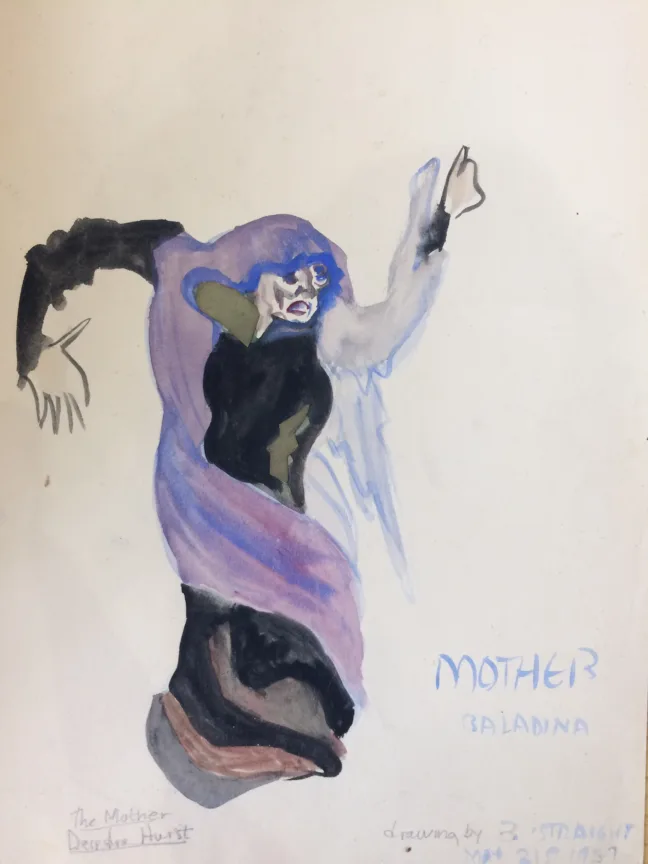
These included direct encounters (e.g. with Isadora Duncan, Uday Shankar, with dancers and teachers from the Jooss/Leder School of Dance at Dartington such as Lisa Ullmann, and probably with Laban), and indirect influences through Chekhov’s collaborators — notably Deirdre Hurst Du Prey — drawing in the practices of Mary Wigman, Margaret Barr, and Martha Graham.
Investigating these historical dialogues and intersections can help us further understand the potential of the technique in dance practice, and move forward the contemporary impulse to find shared languages and approaches for embodied performance across acting and dance.
Resource: Mitchell, R. (2020) ‘Something in the atmosphere? Michael Chekhov, Deirdre Hurst Du Prey, and a web of practices between acting and dance’, Theatre, Dance and Performance Training, 11:3, 255-273.
Keeping the Dialogue alive: Interviews on Contemporary Practice
1. In Conversation with Suzanne Bennett on Chekhov for Dance:
In 2021 Roanna interviewed Suzanne Bennett on her pioneering work exploring uses of Chekhov Technique in formal dance training and creative processes.
Full Interview:
2. In Conversation with Anna Katharina Andrees on Chekhov, Movement, Dance and Circus:
In 2021 Roanna interviewed Anna Katharina Andrees about her work as a teacher and director of contemporary circus, and the blend of influences via Chekhov and various dance/movement practices that inform her approach.
Full Interview:
3. Grace Wranosky on Chekhov Technique in Inclusive Dance Practice
In 2021 the Chekhov Collective hosted Grace Wranosky for a presentation and sharing on the challenges and opportunities of working with Chekhov’s technique in the dance practice and teaching of inclusive dance company Confidance (see also our page on Chekhov in Applied Theatre, Therapeutic and Community Contexts).
Full Interview: