Chekhov Technique: The Contemporary Performer-Maker
Michael Chekhov Technique is best known as a series of tools and principles for actors. However, Chekhov firmly believed that all actors were artists in their own right who should be given agency to function as performance-makers in a holistic sense. He did not believe actors were merely the interpreters of the author and/or director’s text or vision. This perspective is central to the work of The Chekhov Collective in relation to our work with and for actors, dancers and performance makers.
The Chekhov Collective originally met bi-weekly, and in intensive blocks, over a number of years to train together in the use of Chekhov Technique in relation to acting, directing and theatre-making.
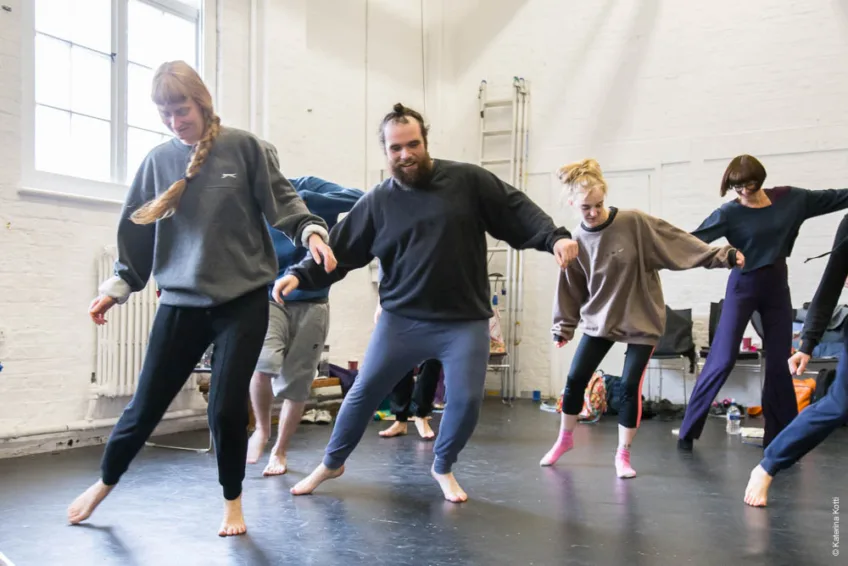
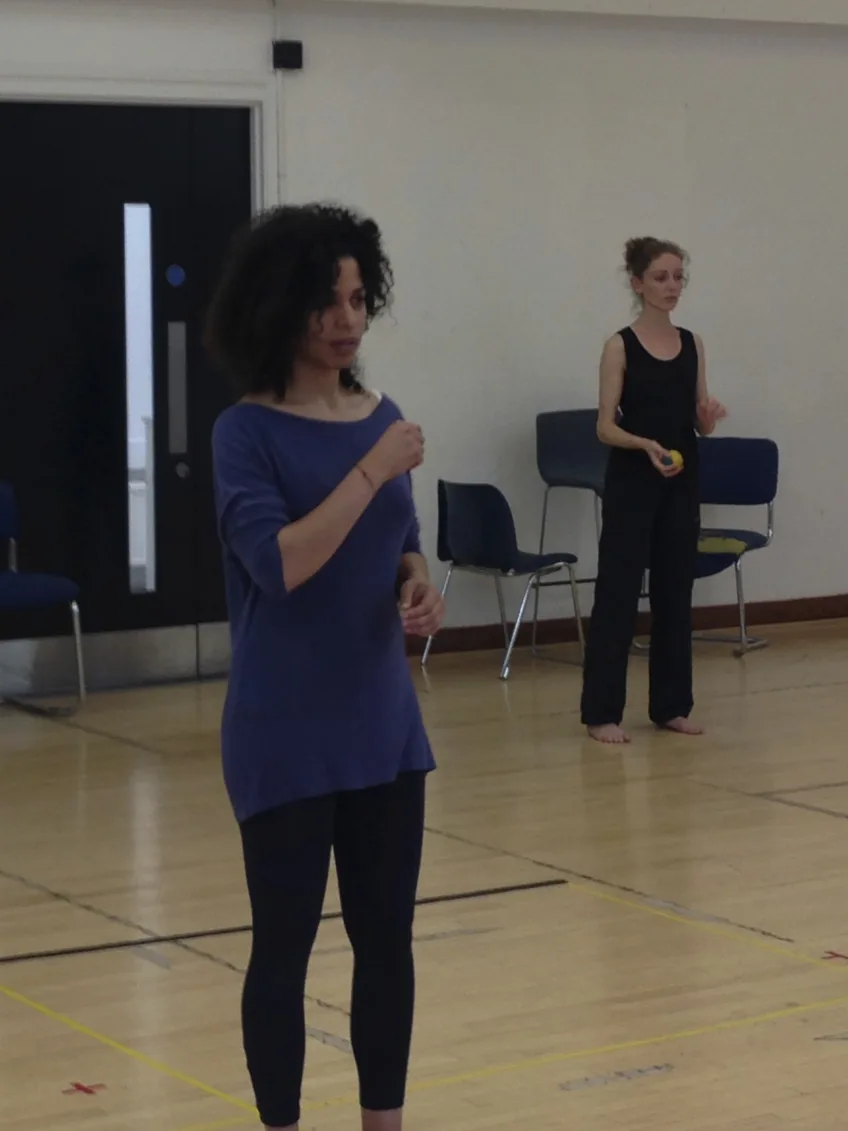
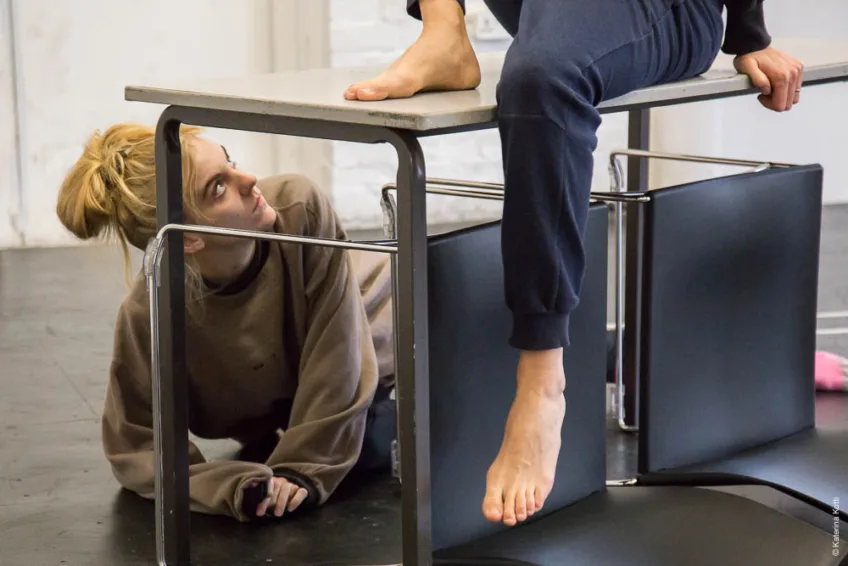
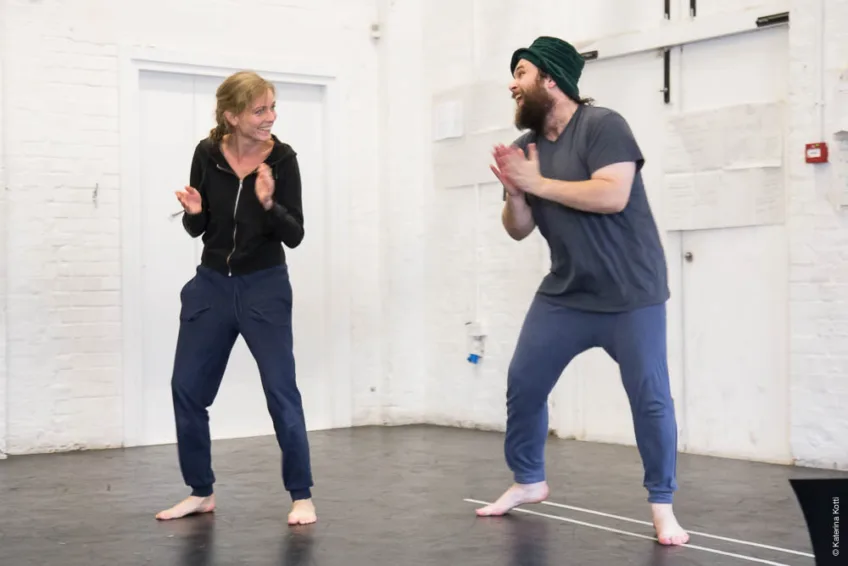
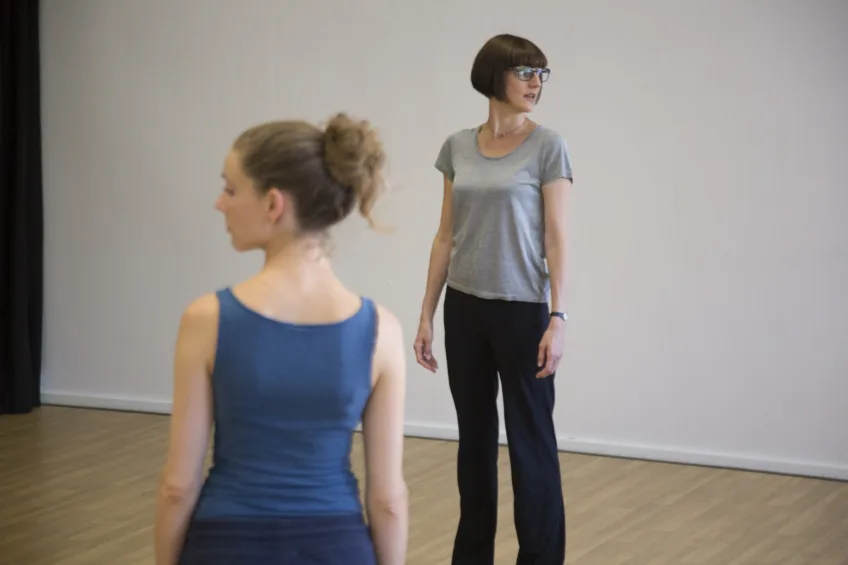
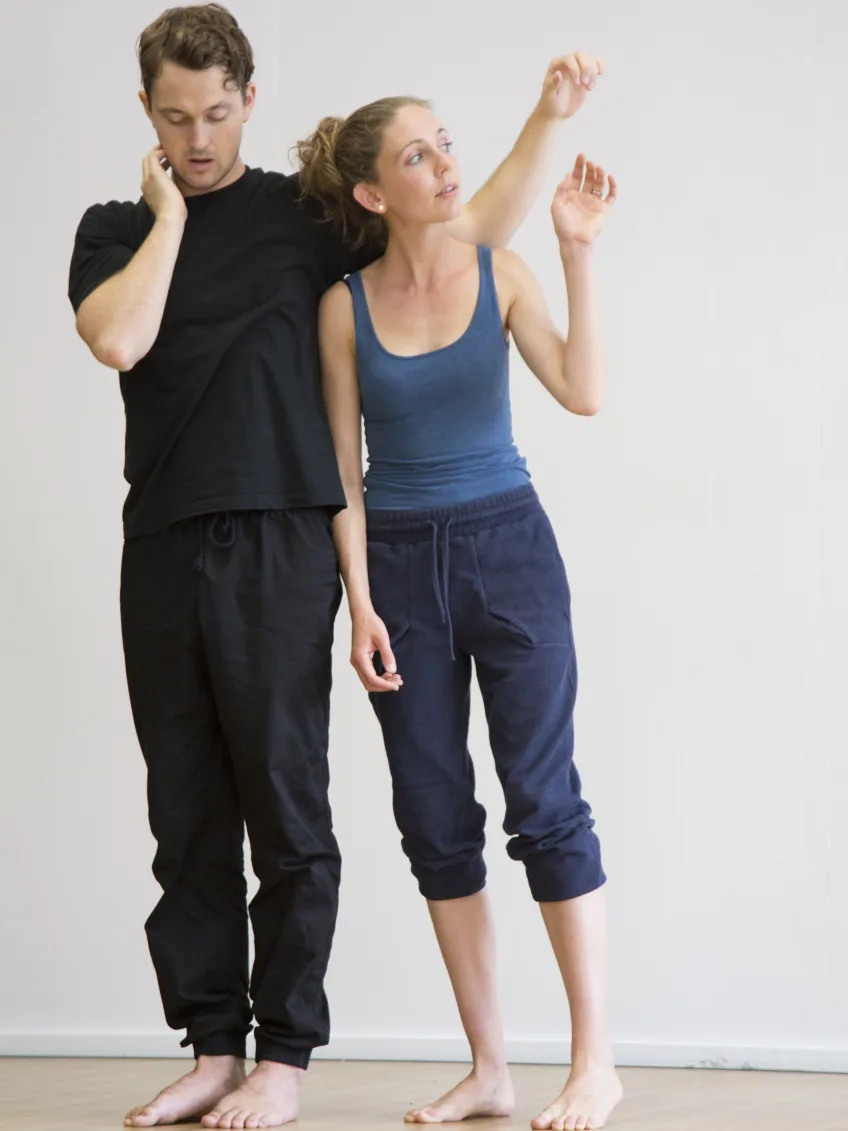
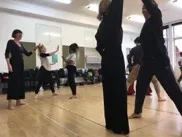
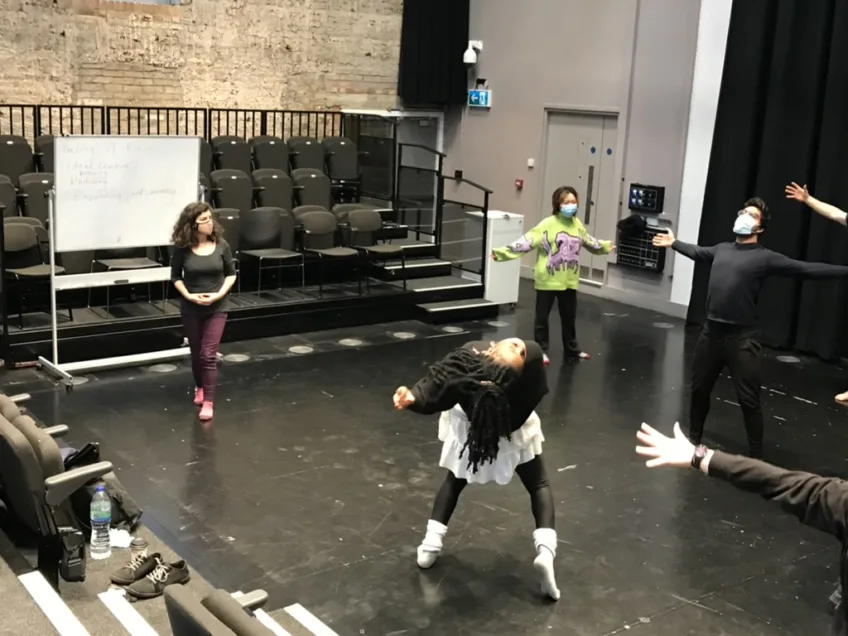
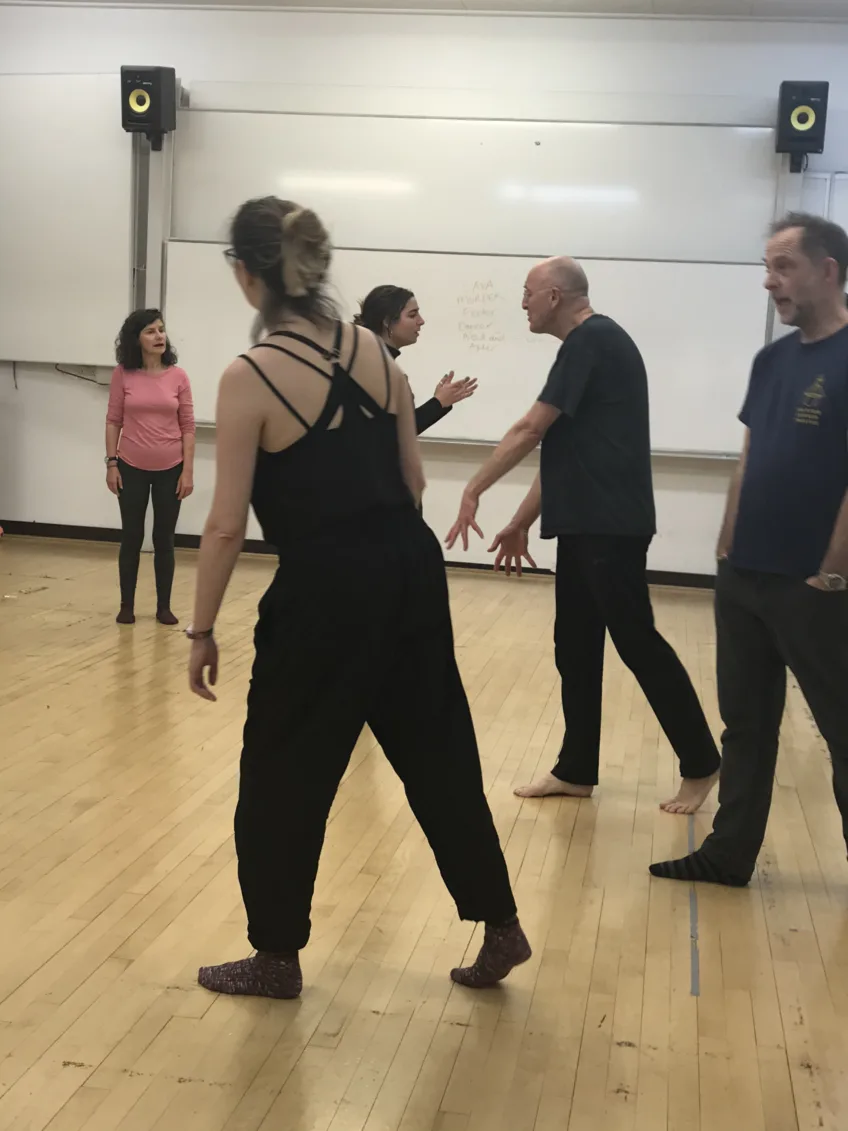
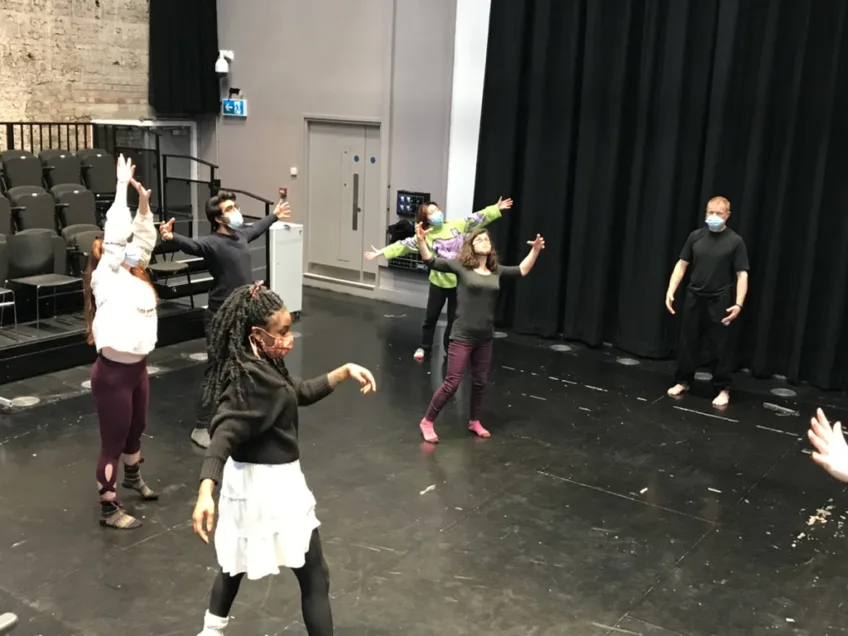
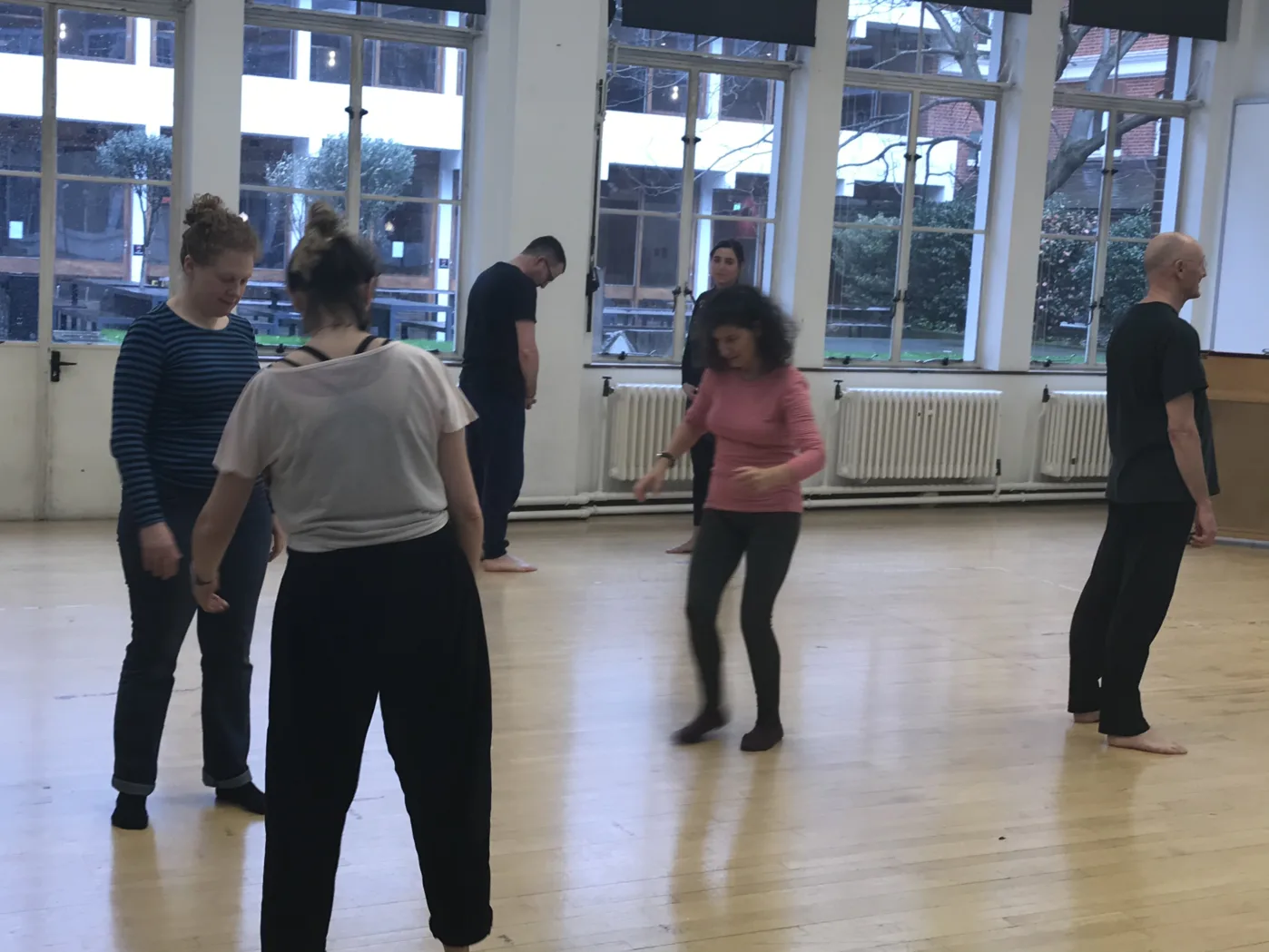
Images of The Chekhov Collective early training– Photographs: Katerina Kotti
This training and collaborative practice research process was initially for the original Collective members only, along with directors at the National Theatre Studio and Young Vic Theatre. However, in 2016 the New Pathways practice research events run in partnership with the Collective extended these training opportunities to over 120 practitioners from different fields.
Inviting community: Open House Workshops
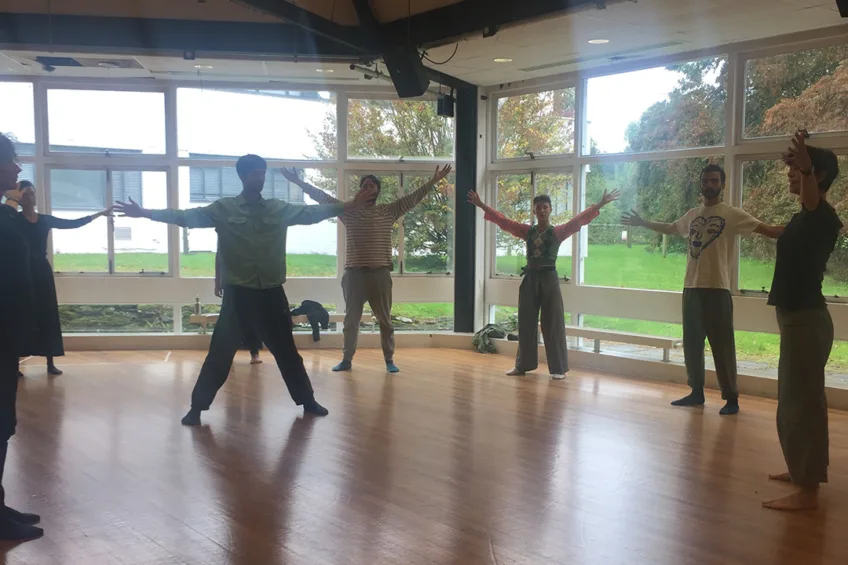
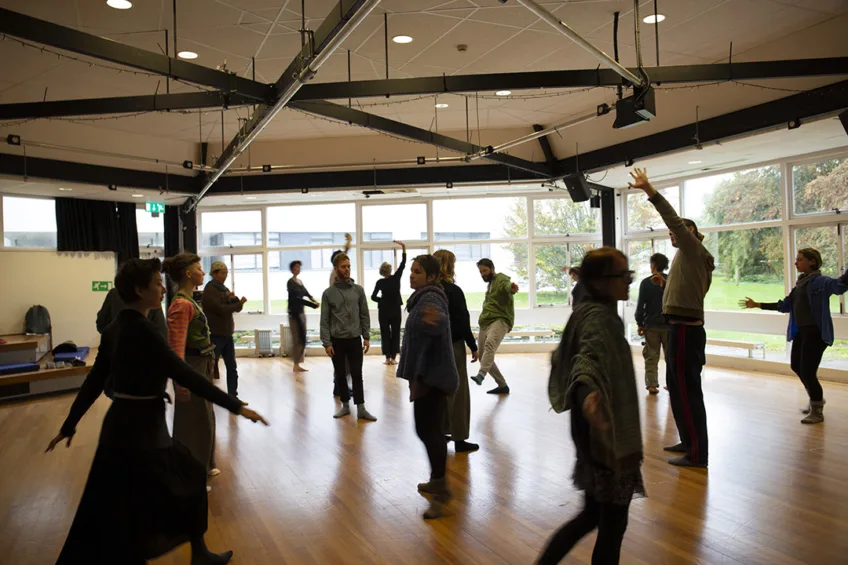
The Collective subsequently launched an ongoing series of workshops designed to be an ‘Open House’ that welcomed practitioners from a wide range of disciplines, and at different points in their career ranging from complete beginners to those with years of experience, in one creative space. These sessions are designed to give an introduction to different aspects of Chekhov Technique for contemporary performance makers.
Open House sessions were designed to be financially accessible to a broader and more diverse range of participants, to push against hierarchical ideas about ‘Master Teachers’ and to celebrate the way in which practitioners at the Collective blend Chekhov Technique with other methods, ideas and cultural practices/perspectives. We have been blessed to work with hundreds of fabulous participants in these sessions from a vast range of disciplines over the years.
The Open House Workshops have been run by core Collective members Cass Fleming, Gretchen Egolf, Tom Bostock, Sian Clarke and Patrick Bailey. They have explored the following topics: ‘Ensemble’; ‘Psychological Gesture’; ‘Exploring Polarity’; ‘Transformation’; ‘Creating Character’; ‘Imaginary Centres’; ‘Chekhov Technique and Objects’; and ‘Dynamics for Scene Studies’.
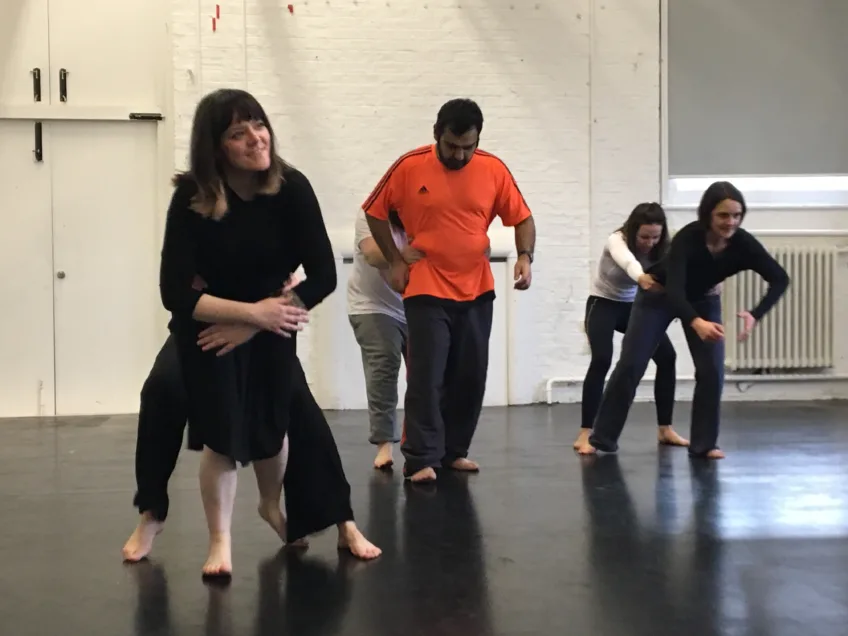
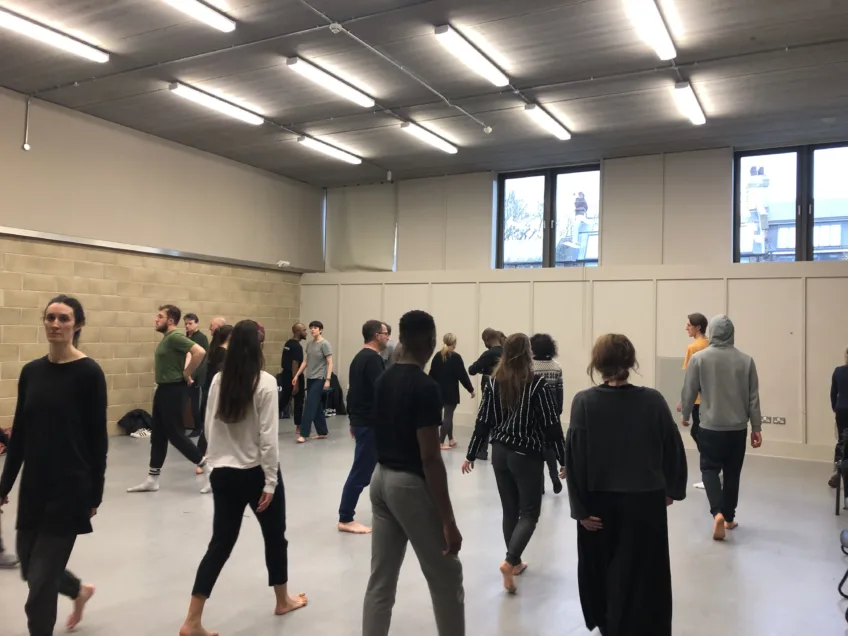
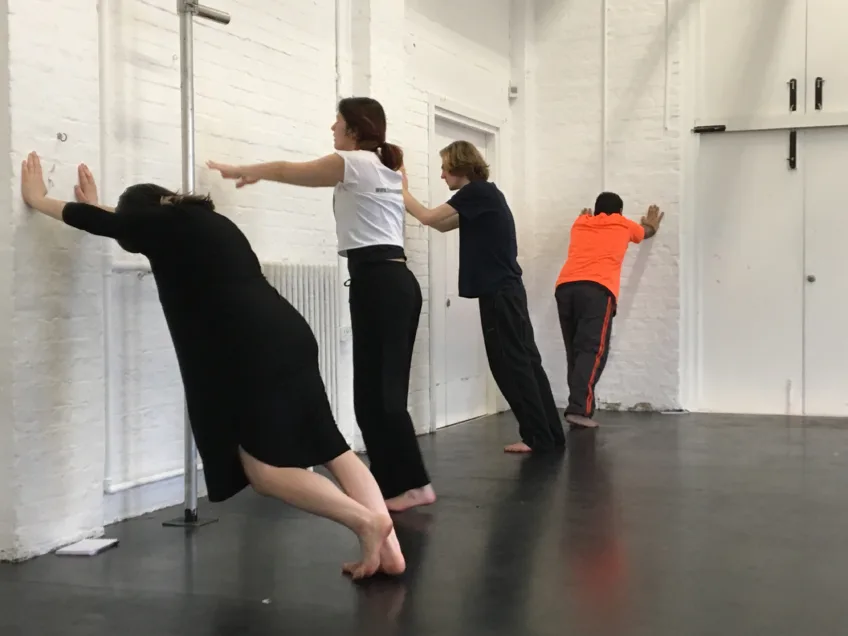
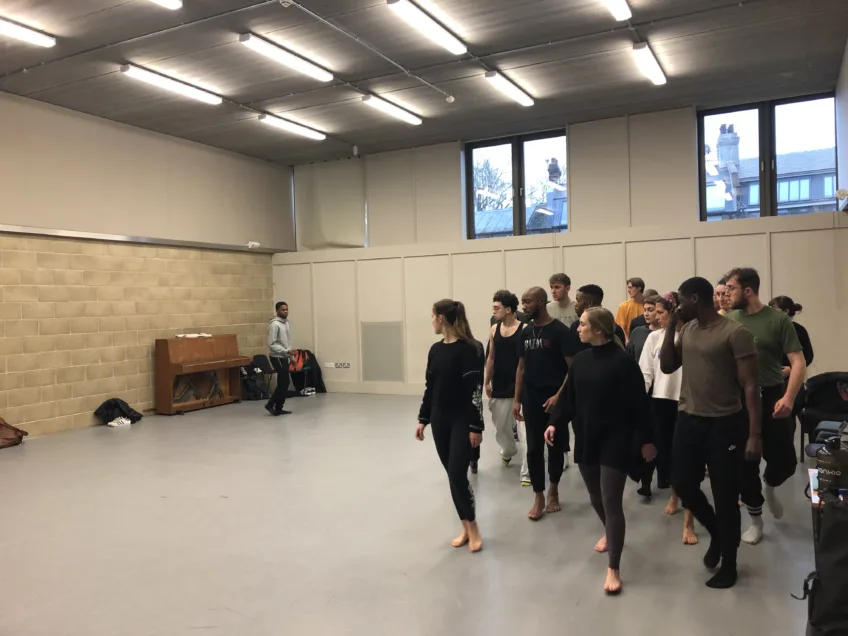
Research Led Workshops for Contemporary Performance Makers
In addition to our ‘Open House’ workshops we have also designed and offered other workshops for Contemporary Performer-Makers over the years. Some of these explored broad principles applicable across the spectrum of performing and making, while others delved into specific areas such as clown, motion capture, voice and circus.
Exploring principles and blends
In 2018 Cass Fleming and Amy Russell (Founder and Pedagogic Director of Embodied Poetics) delivered a full day practice-research workshop that explored Cass’s use of the methods developed by Suzanne Bing (later used by Jacques Lecoq), and Michael Chekhov, in dialogue with those developed by Jacques Lecoq used by Amy. This dialogic full day event was entitled ‘Imaginative Embodiment’ and investigated the points of synchroneity, and divergence, between these practices.
Later that year actor, director and teacher Gretchen Egolf led an exploration of Michael Chekhov Technique in relation to the notion of ‘Musicality’ which developed her work in Italy introducing musicians and conductors to the methods developed by Chekhov. In 2018-2019, Tom Bostock, Director and Actor, led two workshops on ‘The Grotesque’ and fantastical transformations, as well as a session exploring ‘The Actor’s Compass: A laboratory on the dynamics in Space’.
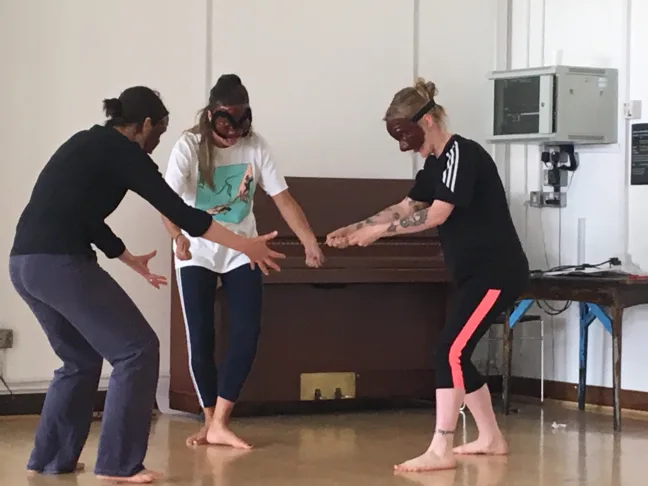

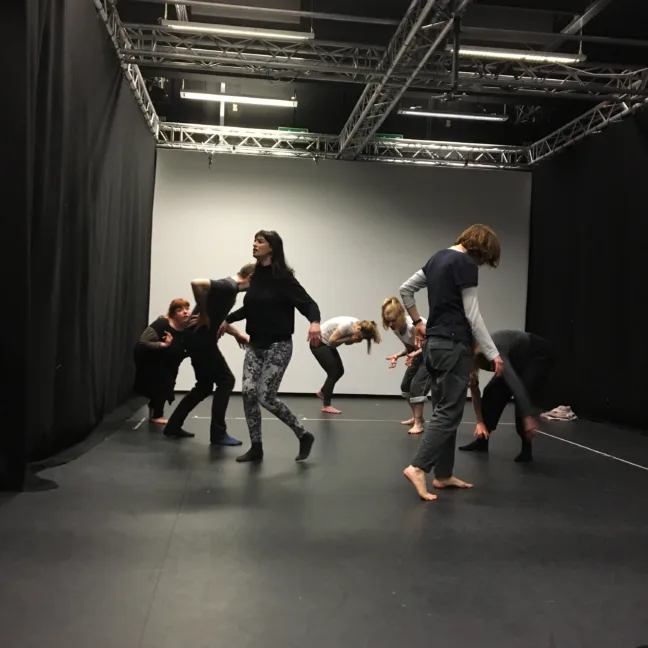
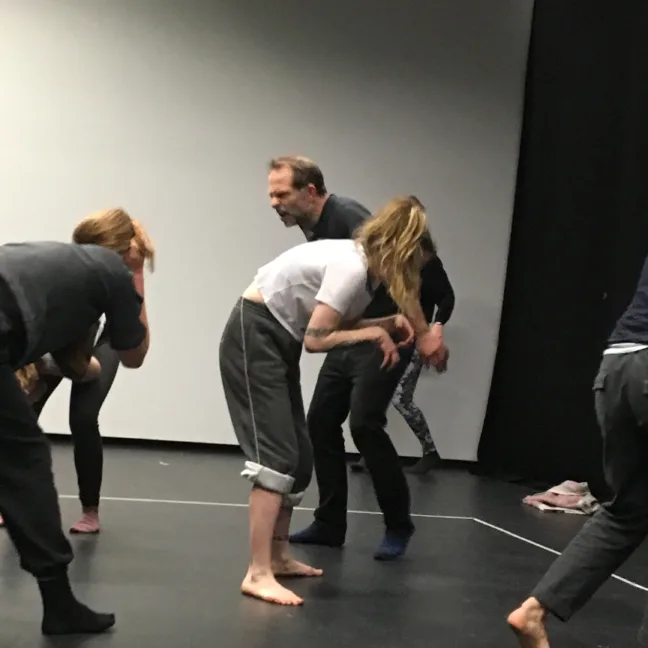
Later in 2019, Gretchen’s workshop ‘Illuminating the Shadow’ invited actors and makers to (re-)find light by exploring Chekhov’s approach to ‘Finding love in our profession’. In June 2019 Patrick Bailey and Gretchen introduced vital practical tools through their workshop on ‘Chekhov for Auditions – stage and screen’, and later that year Graham Dixon (Director of the Michael Chekhov Studio London) led a workshop entitled ‘Chekhov and Atmosphere’. This was a very special session because Graham had taught many of the members of the core Collective in London over the past two decades and this event brought together generations of practitioners based in the UK. You can read about the work of Graham, Martin and Sharp, the founders of Michael Chekhov UK, in an article edited by Tom Cornford, Cass Fleming and Sinead Rushe (2013) Interview: The MCCUK past, present and future, Theatre, Dance and Performance Training.
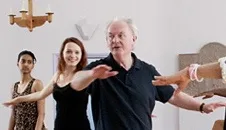
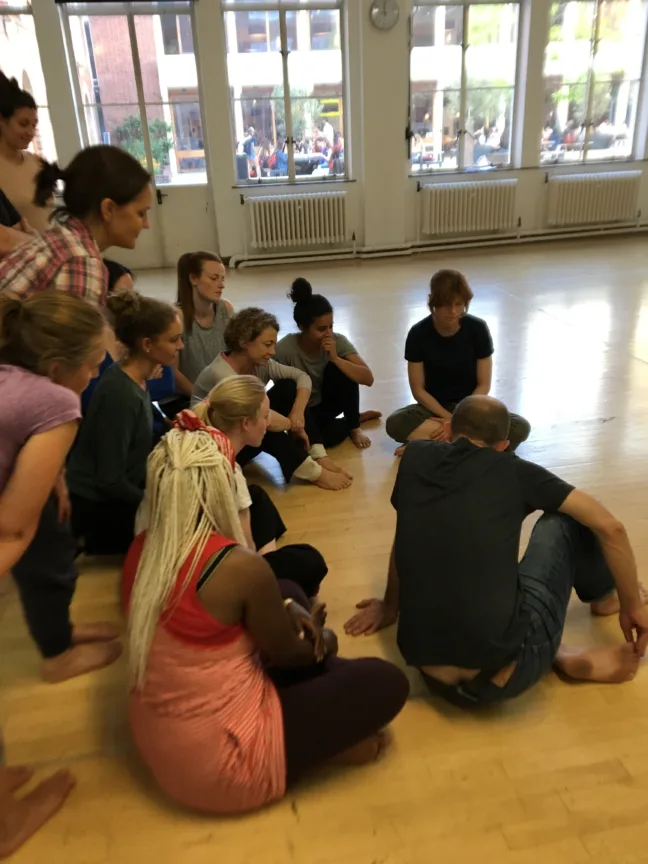
In 2021 Funlola Olufunwa, actor, writer and teacher, led a workshop blending ‘Michael Chekhov Technique with a touch of Laban’ for actors. This offered another perspective and approach on this particular blend, which had also been explored by Roanna and Juliet Chambers in 2016-2018. You-Ri Yamanaka, actor, movement director and teacher, and Founder Member of Michael Chekhov Europe, then led a workshop exploring her blend of Butoh with Chekhov Technique in a workshop titled ‘Freeing the Inner Voice’. This was followed by a session led by a colleague based in the USA, Anjalee Desphande Hutchinson, teacher and director, ‘Darshan’, which explored her investigation into the connections between the Hindu tradition of Darshan and Michael Chekhov’s exercises on Merging.
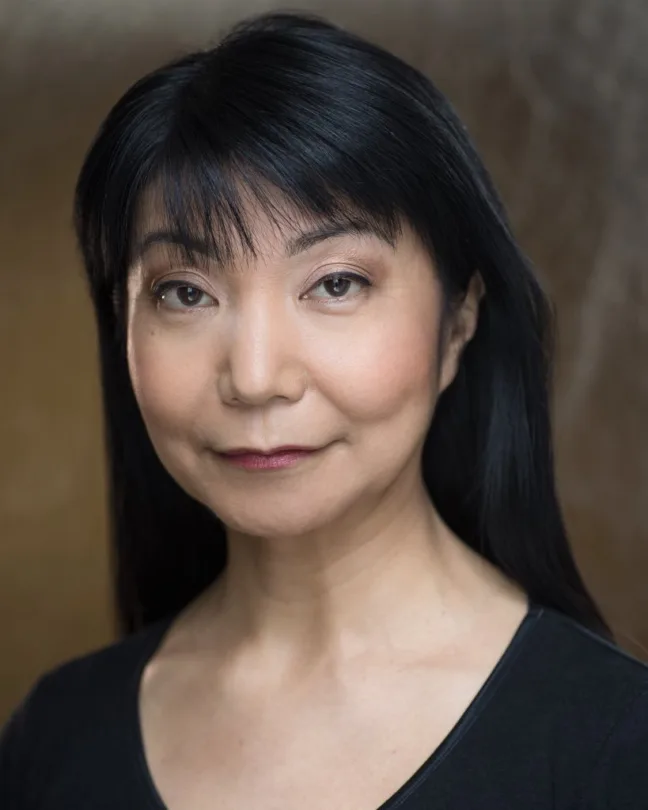
In 2022 You-Ri returned to share a further workshop on ‘Chekhov, Butoh and Actor Training’ and this was followed by an intensive weekend with a guest practitioner from Germany, Joerg Andrees, teacher, director and actor, run in partnership with his organisation, Michael Chekhov International Academy Berlin. In 1992 Joerg co-founded the first Michael Chekhov Conference in Berlin which initiated a world-wide Michael Chekhov Movement. He is MICHA faculty and has taught Chekhov technique around the world. For the Collective he ran an intensive weekend workshop titled ‘Gesture: towards exploring and expressing the inner life of a character’.
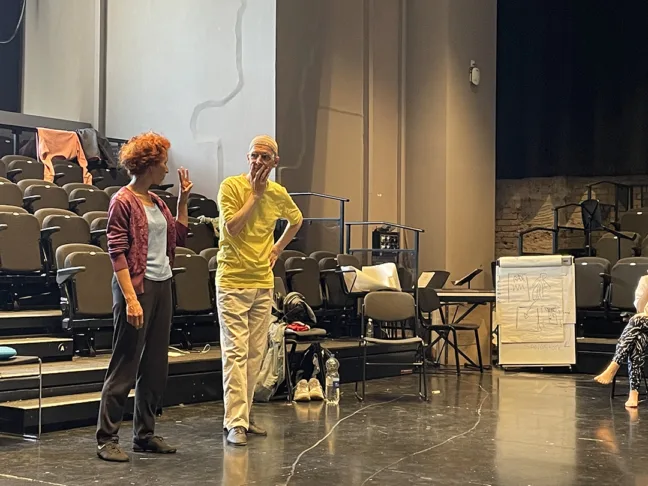
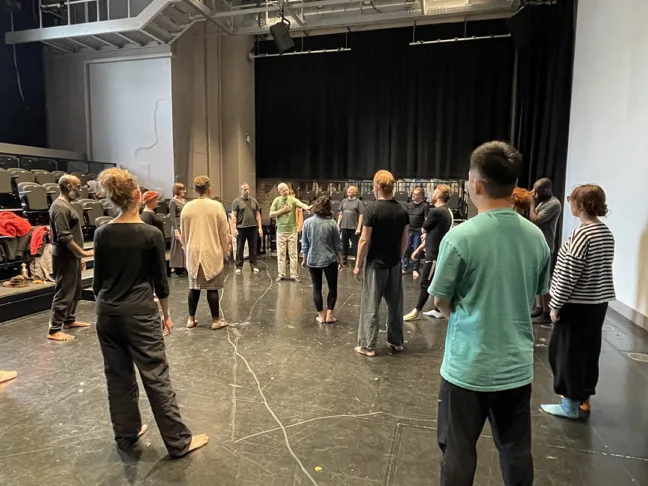
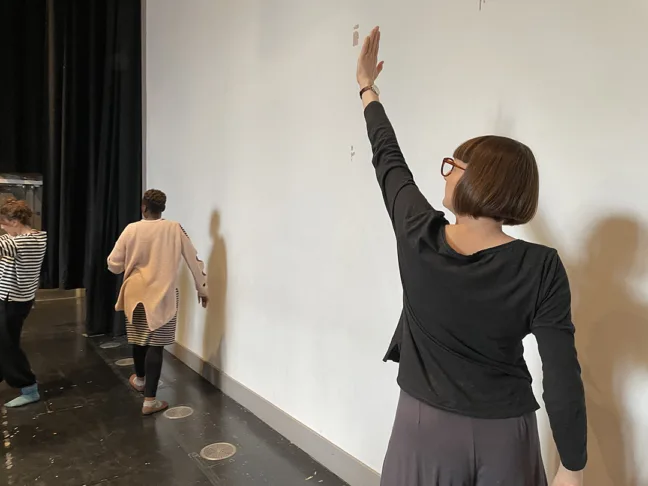
‘Gesture: towards exploring and expressing the inner life of a character’ 2022
For a full list of the Collective’s events, also exploring principles and blends in relation to directing and devising, actor-movement and dance, and therapeutic/community practice, please see our timeline.
Exploring Specialisms: Play & Clowning, Motion Capture, Circus, Voice
Chekhov Technique: Play and Clowning
Play is a key theme for the Collective, and runs as a thread throughout the work, as well as manifesting in particular ways in the topic of Clowning.
Cass Fleming’s specialism is the way in which Chekhov roots his technique in the principle and practice of play. She has explored this in her directorial and teaching practice, practice research and publications since 2005 (2009, 2013, 2016, 2020, 2021). In addition to centralising playing games, play, clowning and comic tricks (lazzi) in his technique, Chekhov also talks about the development of what he calls the Juggler’s or Clown’s Psychology in actors and directors. What did he mean by this? Chekhov’s principles and techniques were related to his passionate commitment to improvisation, ingenuity and originality in acting and the ability for the actor to exist in the moment, being open, available and able to make contact with fellow performers and also with spectators. These skills are exemplified by both jugglers and clowns. Cass has argued that this juggler or clown psychology is therefore a creative principle, or state of embodied mind, that develops an actor’s and director’s ‘predisposition to treat anything as a potential springboard for improvisation and play’ (Fleming, 2013, 2020, 2021).
Resources
You can read Cass’s publication on Chekhov’s use of play for acting, directing and theatre-making for free here LINK TO THESIS, open access here LINK TO ARTICLE, or in chapter one of the New Pathways publication (Fleming, 2020)
In addition to providing tools to help actors develop this kind of predisposition, Chekhov also argues that Directors, and other theatre practitioners and teachers, also need to develop this capacity and related skills, which was a radical position in his time – and remains so now. To see what this might mean for directors see our page ‘Chekhov Technique: Directing and Theatre-Making’.
Clowning is closely connected to play and Chekhov played the role of a clown, Skid, in a production of Artisen directed by Max Reinhardt in 1928. He later wrote about how this experience developed many of his important ideas and techniques and his teaching at Dartington College of Arts drew on clowning practice.
Marjolein Baars, a clown, teacher, director and applied practitioner based in Holland, is one of the leading experts in using Chekhov Technique in relation to clowning practice. In 2019 the Collective was delighted to be joined by Marjolein who led a full day workshop ‘Clowning with Chekhov’ based on her use of Chekhov’s methods for clowning for practitioners in the UK. Marjolein is the Artistic Director of Tiny Hero Productions, was a founder member of Michael Chekhov Europe and is Vice President of the Michael Chekhov Association (MICHA). Marjolein also works in various health and social contexts, to find out more about this see Chekhov Technique: In Applied, Therapeutic, Community and Political Contexts.


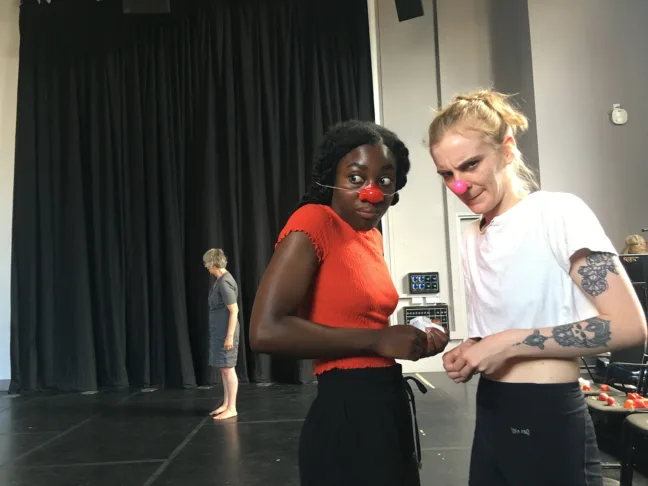
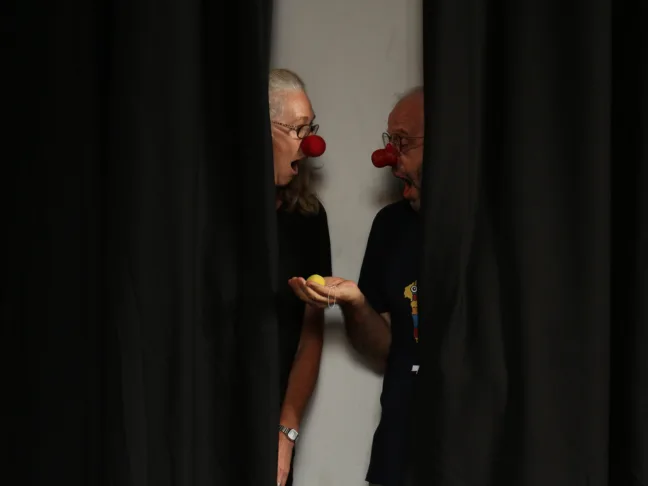
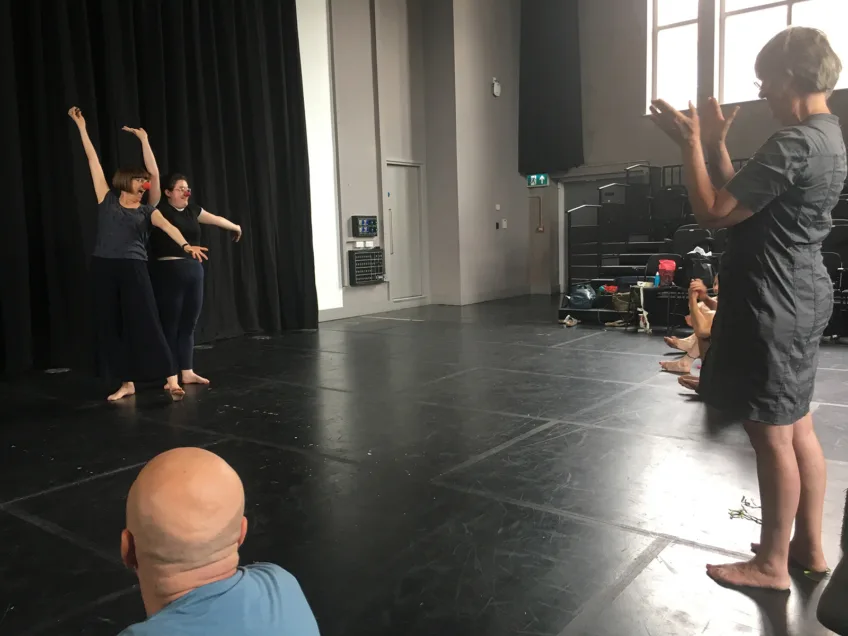
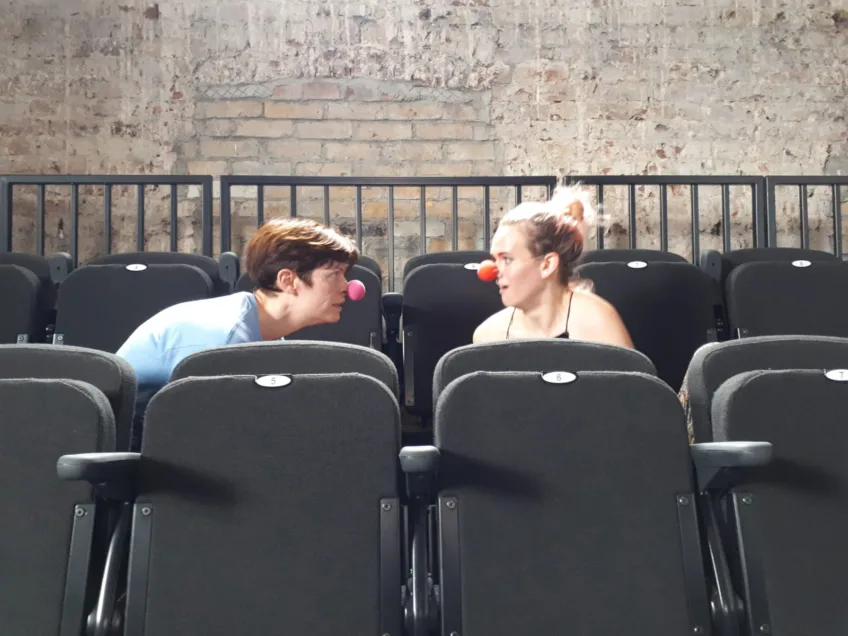
‘Clowning with Chekhov’ 2019
Since 2005 Cass has been using Chekhov Technique in relation to specialist classes on play and clowning for actors, directors, choreographers and theatre-makers. In addition to exploring Chekhov’s methods in isolation, she has also explored dialogues with play practices developed by other practitioners and in different cultural contexts. This includes the seminal practice of play developed by Suzanne Bing in France, with her collaborators Jacques Copeau, Margaret Naumburg and Marie-Hélène Dasté (later used by Jacques Lecoq), and the use of play and games used by Joan Littlewood and Theatre Workshop in the UK. She has also explored these practices in relation to aspects of Augusto Boal’s methods in tandem with radical pedagogy (Montessori, hooks, Freire, etc) and queer approaches to both practitioner training and theatre-making. Since 2005 Cass has developed and taught two specialist courses ‘Play’ and ‘The Politics of Play, Plays and Playing’ at Goldsmiths, University of London. On Saturday 5 October 2019 she ran a full day workshop, ‘Exploring Chekhov Through Play’ which was based on her practice and research. In 2022 she also ran an Open House session which explored Chekhov’s use of objects within the context of his play principle, Objects and Acting.
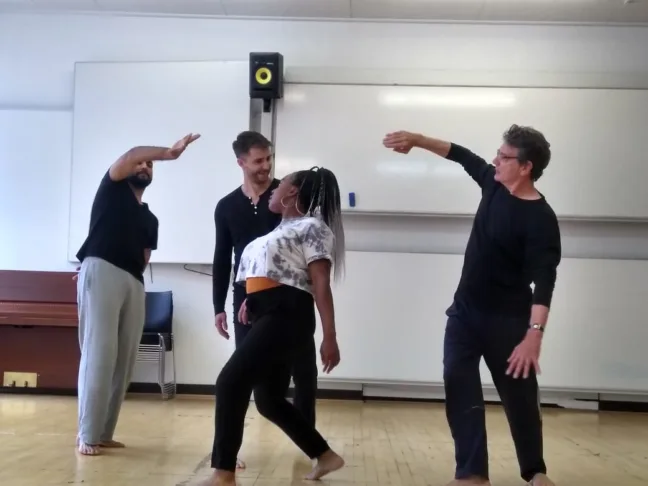
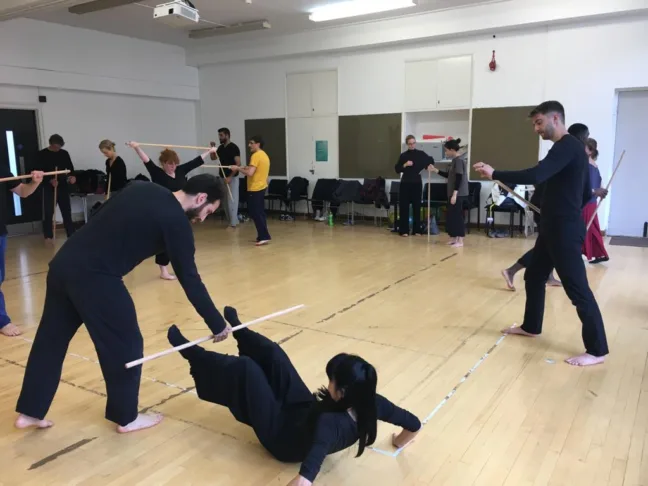

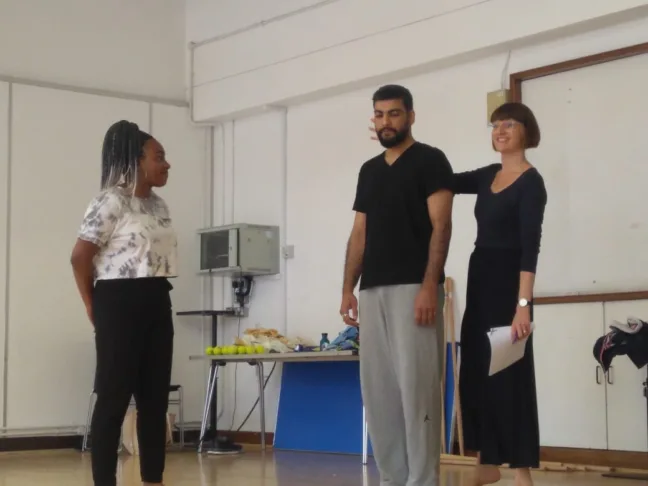
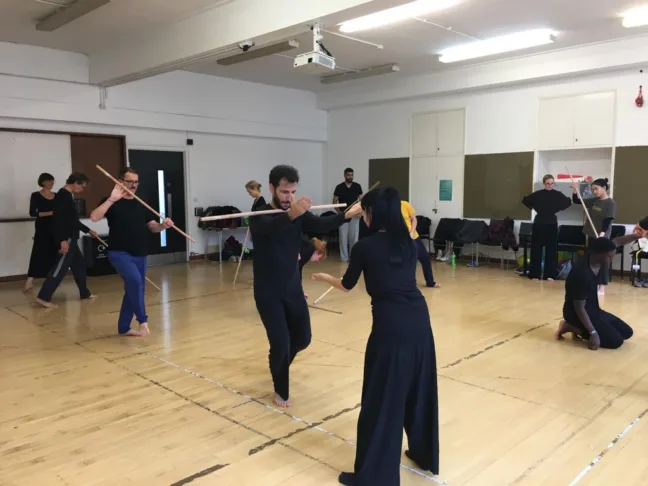
‘Exploring Chekhov Through Play’ 2019
Motion capture
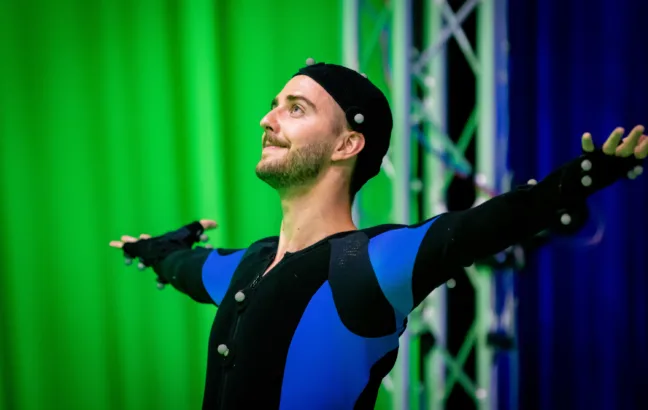
Charles Douglas is an actor, movement and fight director, teacher and researcher, who teaches at the Vancouver Film School. His work explores movement, bodies, and technology in order to catalyze future storytelling. In November 2021 Charles led a workshop titled ‘Theatre of the Future: Chekhov and Performance Capture’ enabling participants to explore this leading-edge use of Chekhov technique. Participants were invited to explore and discuss a playful development of Chekhov’s work that meets the unique needs of performance capture. This session was open to actors, animators, puppeteers, directors, creative technologists and all those interested in digital forms of performance.
Circus
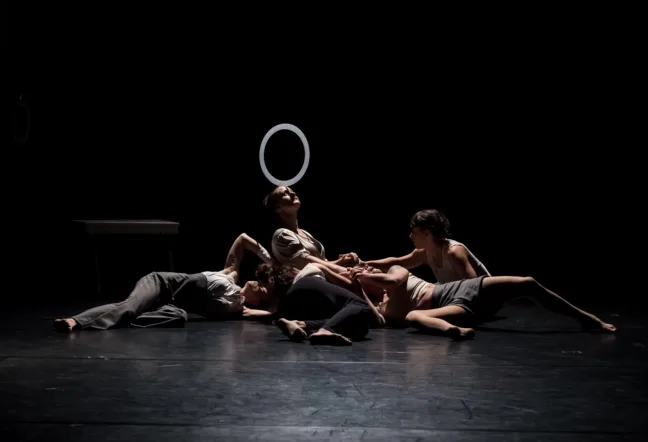
Anna-Katharina Andrees, an actress, director for contemporary circus and Chekhov technique teacher, joined the Collective for a session titled ‘Chekhov and Circus’ in February 2022. This was a ‘sharing of work’ session, which explored questions around Chekhov and creative processes of contemporary circus. Anna-Katharina shared her research and experiences from working with professional circus artists and productions. She reflected on questions such as: Where and how we apply the tools of the technique? And what is the difference when using them for Circus work?
Voice and singing
During the course of the Michael Chekhov Technique in the Twenty First Century: New Pathways research project (2013-2016) a strand was dedicated to the exploration of these methods in relation to voice. This strand was led by Daron Oram, voice teacher and researcher, and he designed and led a Praxis-Symposia on this topic with Christina Gutekunst (Head of Voice, E15) and John Gillett (Actor, Voice Teacher and Director). He also contributed a chapter on this topic to the New Pathways book related to this practice research project (2020).
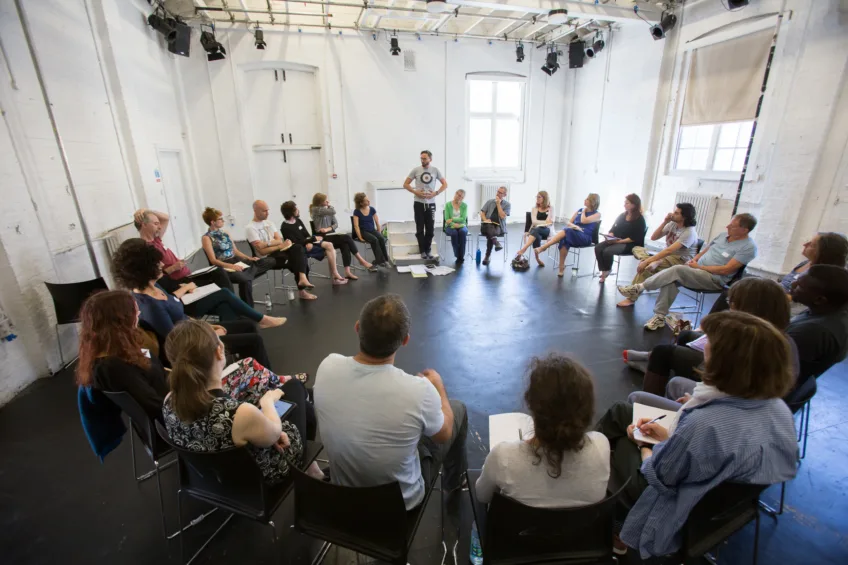
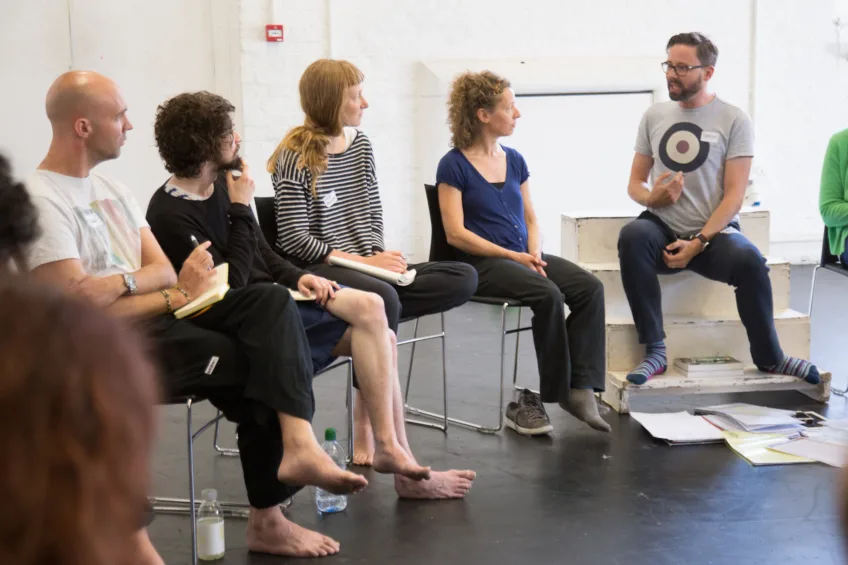
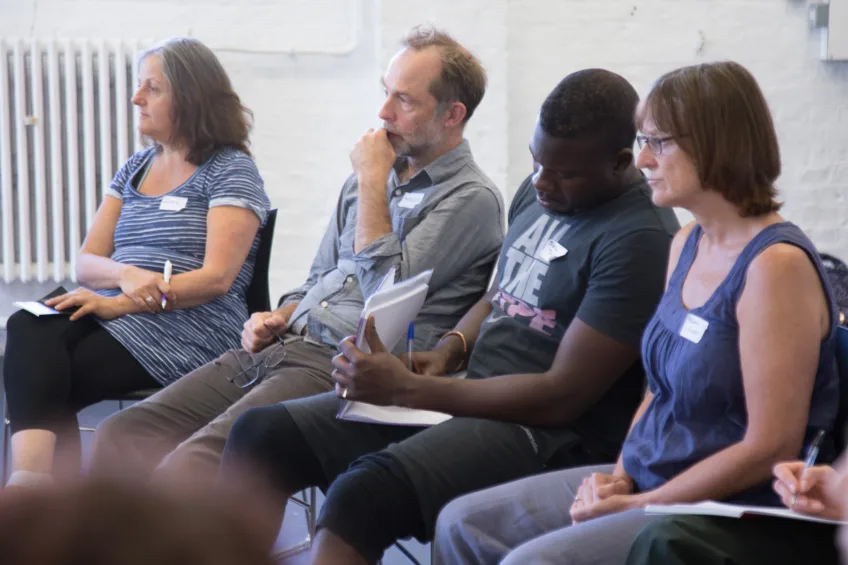
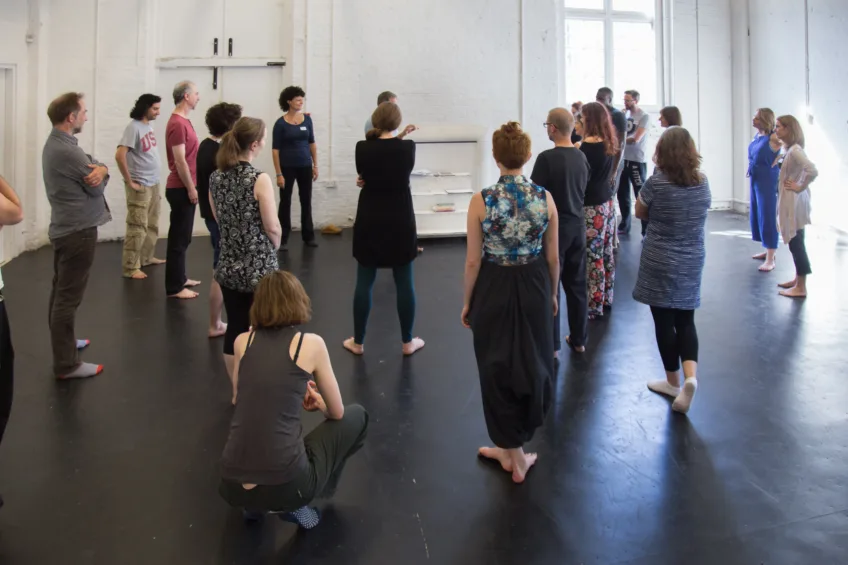
Praxis-Symposia session, New Pathways Research Event, Goldsmiths 2016. Photograph: Katerina Kotti.
On 15 June 2019 Daron led a session exploring his exciting fusion of aspects of Chekhov Technique, the methods developed by Kristin Linklater and a focus on inclusive practice titled ‘Chekhov and Voice: The Doorway Between Breath and Feeling’.
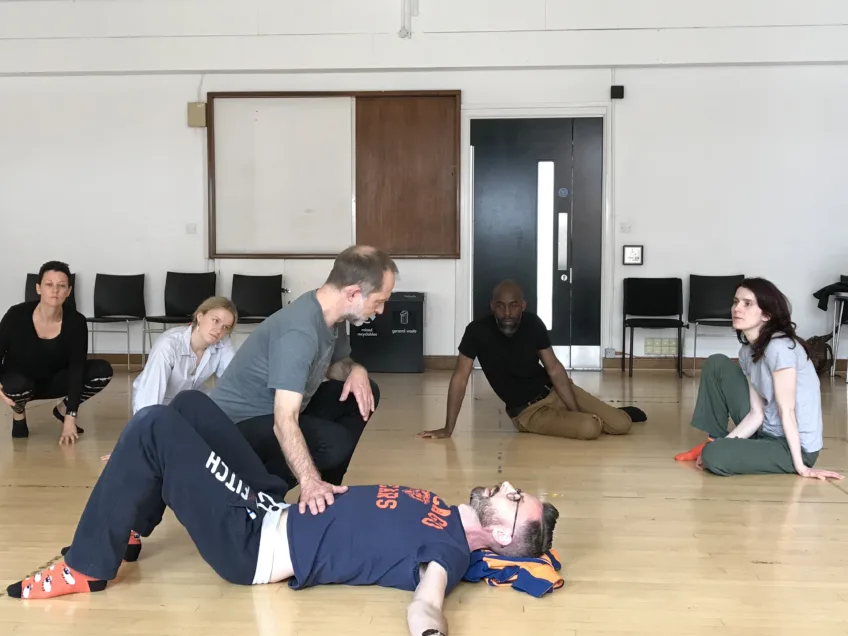
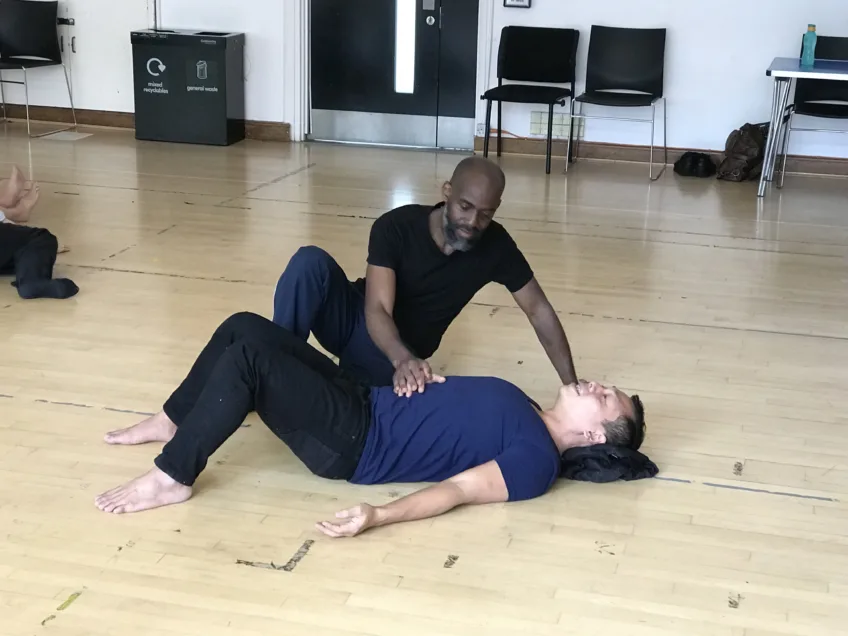
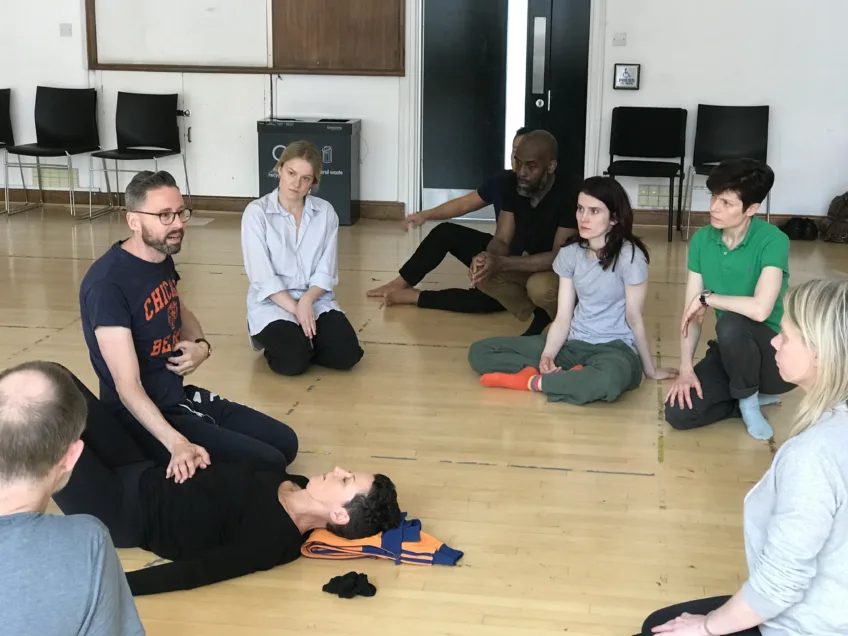
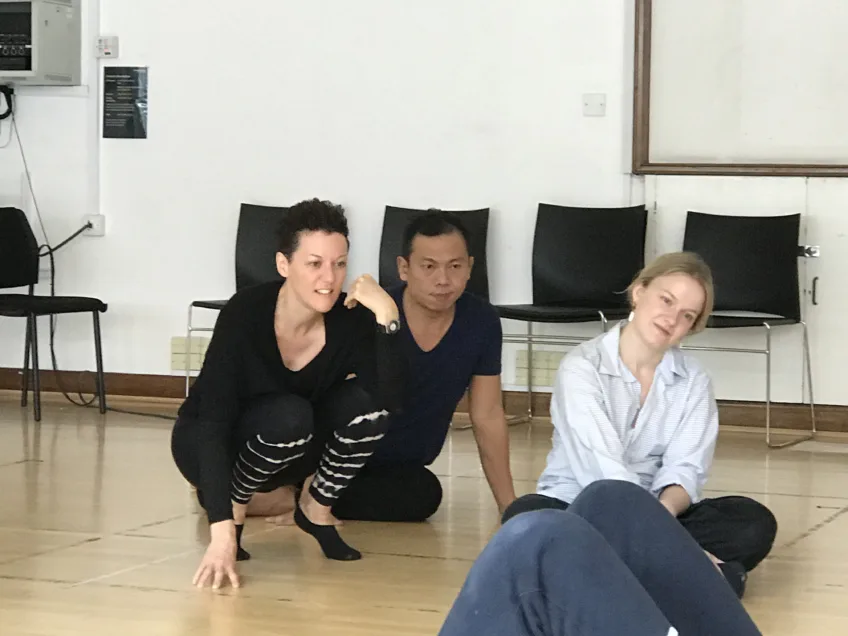
‘Chekhov and Voice: The Doorway Between Breath and Feeling’ 2019
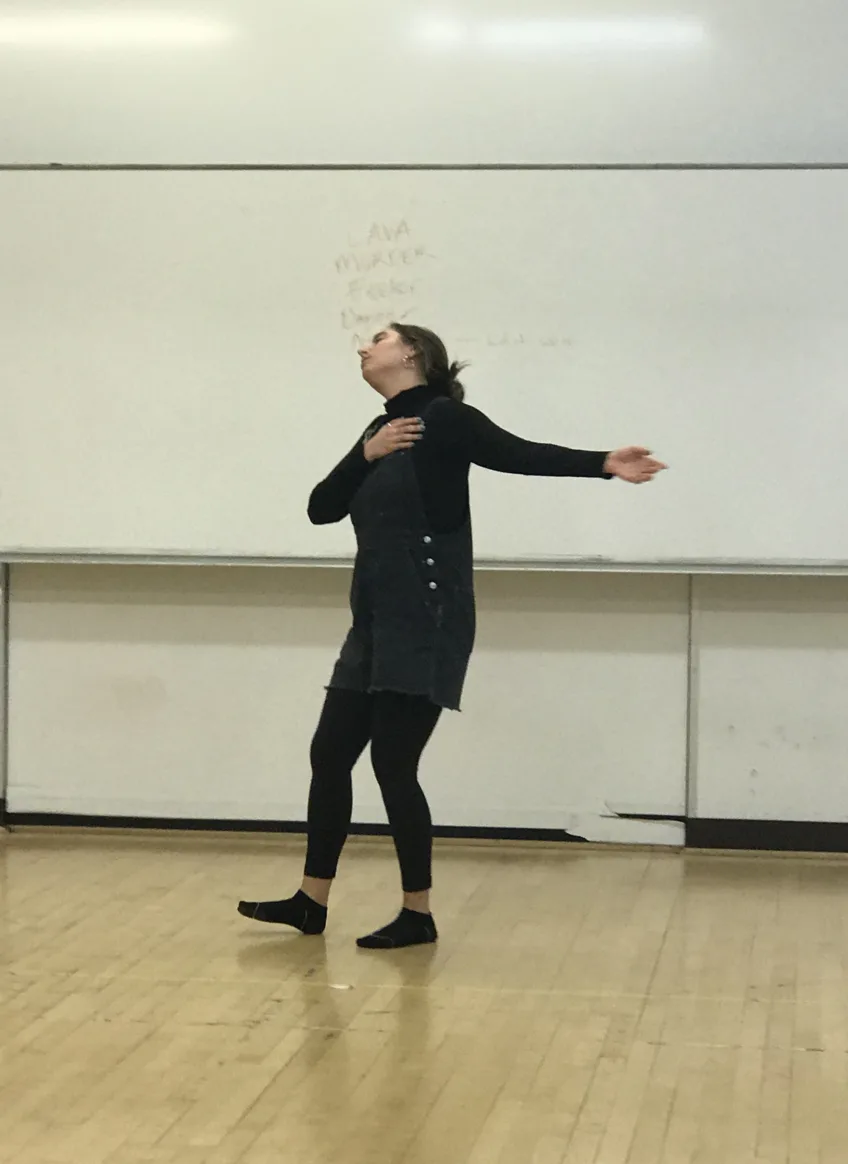
Deborah Garvey, speech and voice teacher at RADA and researcher, subsequently led three different workshops based on her practice, ‘Chekhov meets the Singing Voice’ Vol I (2020), Vol II (2021), Vol III (2022) and Vol IV (2023). Deborah’s holistic approach draws on her early work as an actor and singer, on Linklater technique, on aspects of Michael Chekhov technique, and on her work as a composer which explores spoken-sung approaches to theatre-making.
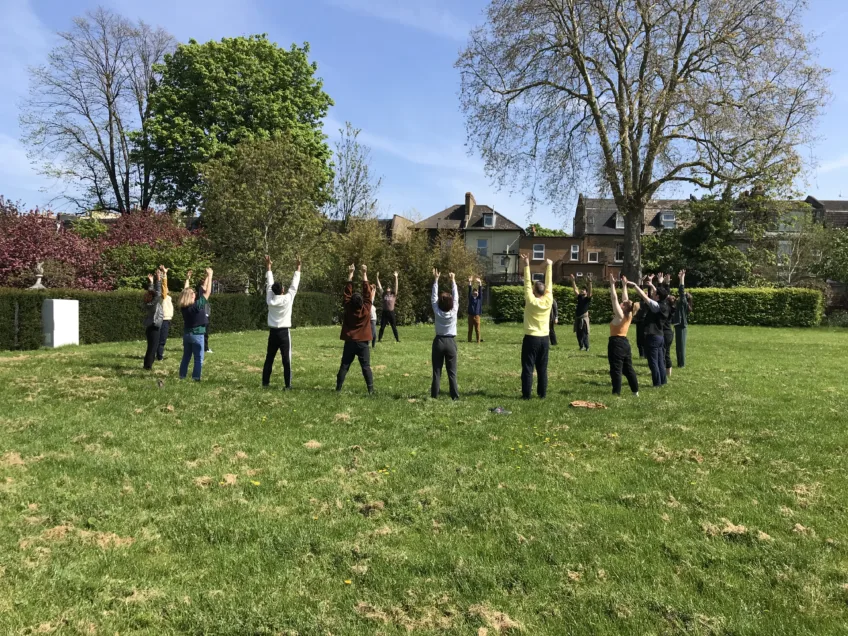
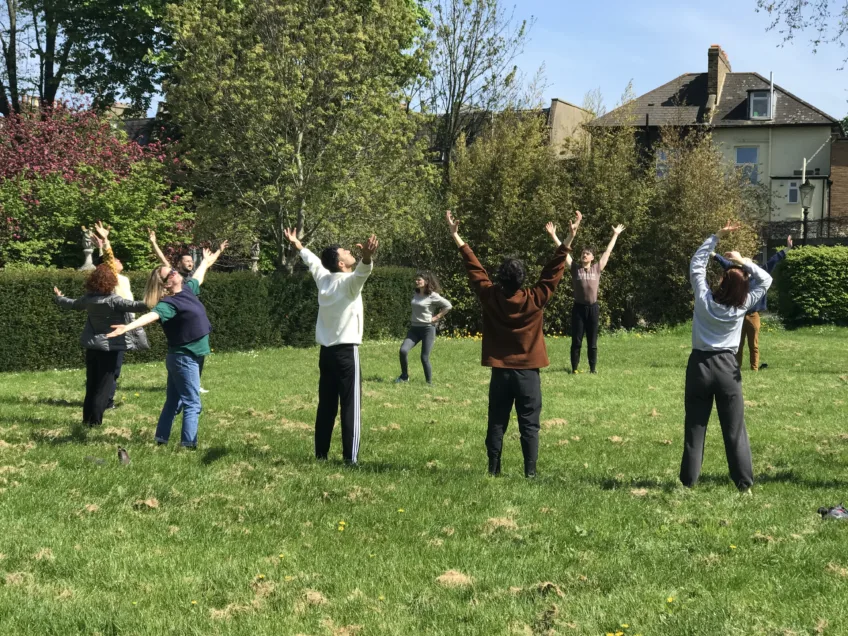
Included in the full day Chekhov meets the Singing Voice IV (2023) workshop was a question and answer session with Deb Garvey about her practice research and the aspects of Chekhov Technique she found particularly useful in contemporary voice work.


Cross-disciplinary Exchanges
Embodiment and Performance: Celebrating the Legacy of Michael Chekhov at Dartington Hall
In 2019 Gretchen Egolf and visual artists Adam Chodzko in partnership with the Aller Park Studios presented a weekend of events, including workshops, a film screening, talk and performances which explored Chekhov’s embodied practice in relation to cross-disciplinary arts practice. The events were open to visual and performance artists and musicians.
This project was particularly apt as Michael Chekhov’s theatre studio was based at Dartington Hall and he and his students would collaborate with visual artists and dancers who were also working at Dartington during this time.